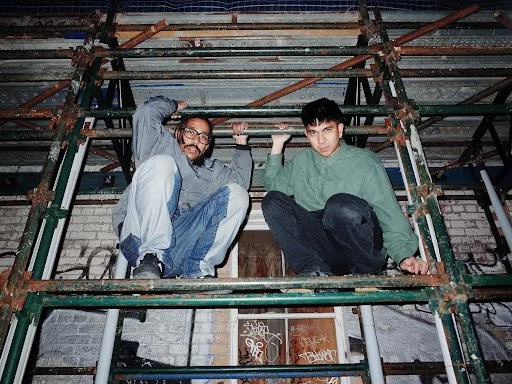
Talking to: Teether & Kuya Neil
London/Melbourne rap duo Teether & Kuya Neil released their debut album ‘Yearn IV’ on May 2nd. The futuristic and experimental hip-hop record is an impressive debut and marks the start of an exciting career. I spoke to the duo on the genesis of their project, real life influences, and navigating the underground scene
YEARN IV is your first project since 2023’s STRESSOR. What internal or external forces shaped the emotional and sonic direction of this new record?
Teether: It was the first time we’ve been able to record with time on our hands. Not much time, but enough for us to fully focus on making a project for a week or so. STRESSOR and everything before was made in the midst of juggling creativity with work and other responsibilities. For YEARN IV, we were able to leave that stuff alone for a bit.
Neil: This record was also produced more collaboratively, and in real time together. We both played guitars and keys and contributed to the songs like a band.
Your music channels the spirit of the early internet; chaotic, collage-like, fragmented but profound. What parts of that digital upbringing still echo in your process today?
Teether: I still make music in pretty much the same way I did when I was a teenager: hunched over a computer in a dimly lit room. We both spent a lot of time on that era of the internet so it’s embedded in our musical brains.
Neil: There is a correlation between poor posture and musical quality. For me, it's the process of digging through old websites, forums and archives for something to sample. Despite how centralised it is now with services like Splice, I'm still very attached to the manual, slower way of finding samples, as it feels more personal. It's also free!
GLYPH got you onto Netflix. STRESSOR landed you chart positions. YEARN IV is more abstract and emotionally raw. Do you think about career “momentum” or are you carving out something slower and deeper?
Teether: I want to make music for the rest of my life. I think honesty is essential to being able to have longevity. The career thing doesn’t ever come to mind as this shit has never paid rent. Hopefully one day that will change, but it’s not the main drive. We have jobs. Each album is its own period of time and unique energy, we focus on leaning into that to make the most real project we can. I am interested in the concept of career suicide and dropping something crazy different which alienates people. Though, I reckon we’ve set the pretense that we do whatever we want so I don’t think anyone will be that shocked if we go in a new direction.
Neil: We definitely like it slower and deeper
What’s something about YEARN IV that only reveals itself after the 3rd or 4th listen, that casual listeners might miss?
Teether: I’ve heard it too much to even know what people can or can’t hear. I wish I could hear it from a casual listener perspective.
Neil: The high hats on Chanel are 1db too loud
Your single "ZOO" is a paranoid yet poetic portrayal of alienation. Can you expand on how the metaphor of ‘animals running wild’ reflects your experiences in today’s cultural or music landscape?
Teether: The whole world is eternally chaotic and we have to act like it makes sense in order to get through each day. It’s strange. I don’t think the song is that deep though, I don’t really have a point other than it’s a bit weird to be alive in the midst of it all.
Neil: It's about unleashing the furry within (not a typo)
You’ve called yourselves “musical outsiders.” What does that mean to you right now and how does YEARN IV embrace or reject that identity?
Teether: We’re a relatively new generation in Australia to have grown up there, so the type of people we are hasn’t necessarily been represented publicly very much. At least not in the way we want to. I don’t think we’re doing anything revolutionary but we are staying true to ourselves. We’re quite staunch about being honest and making shit that we like.
Neil: We were very set on creating our own world on this record and not feeling pressure to keep up with current sounds.
How did collaborations with artists like Nerdie, Alice Skye and Stoneset shape or challenge the world you were building in YEARN IV?
Teether: They’re friends of ours and artists we look up to so it’s quite easy to work with them. All of those songs were done in one session each, just throwing ideas out and seeing what sticks. They killed it!
Neil: Their input elevated the songs and took them places we wouldn't expect. Collaborating with our friends is important so people understand the context of our music, and how interconnected it all is. We are just two people who are part of a bigger thing.
Kuya Neil, your production feels like it breaks a lot of traditional rap frameworks. What are some unlikely sources or references that guided your beats on this record?
Neil: I think mixing club, dance and hip-hop has always been a thing. 2010s queer New York club adjacent rap (artists like Le1f, Mykki Blanco, Njeena Reddd Foxxx, early Princess Nokia) was the stuff that inspired me the most to want to be a producer. I was also a huge Smashing Pumpkins fan as a teen. That band taught me to mix everything you love into one, even the stuff that isn't fashionable at the time.
Teether, your cadence is often described as singular. How do you approach writing and flow when working with Neil’s genre-pushing soundscapes?
Teether: I don’t really know what that means but I don’t disagree either. It’s so easy to write in our sessions, I honestly don’t think about it too hard. Once a flow comes to mind, I start filling in the gaps with words and then we record.
You collaborate across genre, gender, and scene boundaries. Is that boundary-crossing intentional, political, or just instinctive to how you exist in music?
Teether: This is just our genuine environment. For lack of a better term, our friends are diverse, our scene is diverse and our musical tastes are diverse. Everything is political because of the place we’re from, and from being among so many people trying to navigate a complex place with complex identities. I feel like we’re being normal.
Neil: Yeah, it's very normal for us. A lot of artists like us strive to find meaning through identity and look to connect with other folks from that shared experience.
You've played alongside artists like Shabazz Palaces to RP Boo and Kim Gordon. What do you take away from sharing space with artists who also reject easy categorization?
Teether: People say don’t meet your heroes but I disagree. They’ve all been so welcoming to us and passionate about their art and uncompromising. It’s nice to see the art embodied in the person or vice-versa. The biggest thing I’ve taken away is that artists that do shit forever and make stuff true to them are real music nerds. You have to love it, even when it’s not easy.
Neil: It's so cool to see their passion and love for music remain strong after such long careers. It’s very inspiring!
You can find out more about Teether & Kuya Neil on their instagram.
Interview by Melvin Boateng



Opinion