
From Streetwear to Quarterzips: What Changing Dress Codes Reveal About Power, Anxiety, and Masculinity
The quiet return of quarterzips, office-adjacent clothing, and minimalist everyday wear is often explained as a natural style correction after years of streetwear dominance. But fashion rarely shifts in isolation.
When trends move away from maximalism, overt individuality, and expressive silhouettes toward restraint and professional legibility, it usually coincides with economic contraction rather than improved taste.
This pattern is familiar. Fashion tightens when money does.
The excess of the late 1980s collapsed into the pared-back styles of the early 1990s recession, when bold colors and experimental silhouettes gave way to practicality and subdued tailoring. After the 2008 financial crash, loud branding lost cultural traction, and minimalism took its place, framed as “timeless” or “essential” rather than expressive. These shifts were not about maturity. They were about risk management. When futures feel unstable, standing out stops being aspirational and starts being dangerous.
The current return-to-office-leaning casual wear follows the same logic. Quarterzips, neutral knits, tailored trousers, and clean silhouettes dominate not because they excite, but because they reassure. A quarter zip is a knit or lightweight sweater featuring a short zipper that runs from the collar to the upper chest, designed to be worn either layered or on its own. It sits between casual and formal, offering the ease of a sweatshirt with a more structured, office-appropriate appearance. They signal employability, composure, and seriousness in a moment where being perceived as reliable has real value. Even outside formal workplaces, people are dressing as if they might be evaluated at any moment. Casual wear has been professionalized. Comfort now comes with conditions.
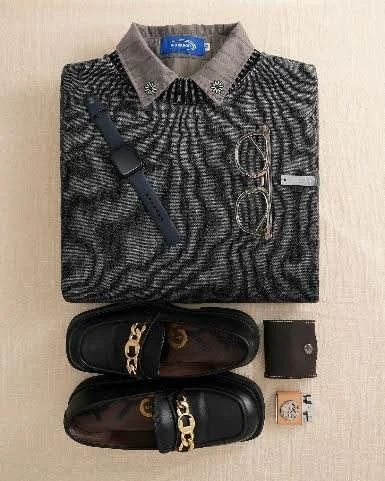
Photo by Vooglam Eyewear on Unsplash
This narrowing of acceptable style also reflects a retreat from individualism. Maximalism flourishes during periods of cultural confidence, when people feel secure enough to take visual risks. Minimalism rises when caution sets in. Today’s preference for neutral palettes and interchangeable staples reflects a desire to blend into legitimacy rather than stand apart through expression. Individual style has not disappeared, but it has been compressed.
Masculinity sits at the centre of this shift. Streetwear culture of the last decade often functioned as visible masculine performance, built around status, dominance, and peer recognition. Loud branding and oversized silhouettes were less about comfort than about occupying space. As economic pressure rises and traditional markers of masculine success become harder to access, that visual bravado has begun to lose appeal.
In its place, a quieter masculinity has emerged, one that aligns more closely with the female gaze.
Drawing on Judith Butler’s theory of gender as something repeatedly enacted rather than possessed, this moment reflects a change in how masculinity is performed under new social pressures. Where streetwear once enabled loud, homosocial displays of dominance and status, contemporary styles favour restraint, emotional regulation, and visual competence. These traits align more closely with the female gaze, which tends to reward social fluency and stability over spectacle.
However, this shift should not be read as liberation from performativity. Instead, masculinity is being rehearsed in quieter, more institutionally legible ways. The uniform has changed, but the expectation to perform remains.
Where dominance once took the form of volume and aggression, it now appears as calm competence and emotional containment. The quarterzip communicates reliability, stability, and seriousness. Qualities are often coded as attractive, employable, and socially acceptable.
However, this raises an uncomfortable question. Is this a genuine shift toward emotional maturity, or merely a subtler performance better suited to current social incentives?
The performance has not disappeared. It has simply learned to lower its voice.
Online, this evolution appears in trends like the rise of “matcha men” and soft masculinity aesthetics, where emotional awareness, minimal fashion, and curated domestic rituals are celebrated. While often framed as progress, these trends remain highly aestheticised. Softness becomes another trait to display, optimise, and compare, particularly in spaces shaped by algorithms and visibility.
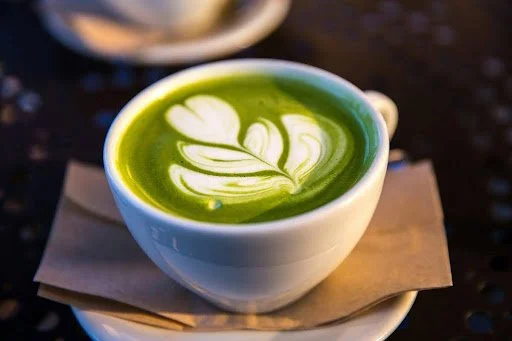
Photo by Jason Leung on Unsplash
The broader move toward office wear and minimalist everyday fashion also mirrors a labour market that increasingly demands professionalism without offering security. Stability is implied through appearance rather than guaranteed through structure. Looking credible becomes a personal responsibility.
Seen this way, the shift away from maximalism and toward quarterzips and neutral uniforms is less a fashion evolution than a cultural signal. When economies tighten, expression narrows. When futures feel uncertain, neutrality becomes protective.
The question is not whether quarterzips are better than streetwear. It is why society increasingly rewards invisibility, restraint, and compliance in moments of uncertainty, and what that says about who is allowed to be seen, heard, or taken seriously.
Fashion, as ever, tells us how safe people feel about being seen and how gender identity is performed.

Written by Aliza Iqbal