The Nanny with a Camera - Finding Vivian Maier
After buying his first home in 2005, John Maloof became deeply involved in his neighbourhood on Chicago’s Northwest Side, eventually co-authoring a book to spotlight the area’s overlooked history — a decision that would change everything.
While hunting for vintage photos for the project, John stumbled upon a box of old negatives at a local auction. The images, mostly from 1960s Chicago, didn’t suit the book, but something about them stayed with him. Months later, he began scanning them. Though he had no background in photography, the work struck a chord. Inspired, he picked up a camera himself — first a point-and-shoot, and soon a Rolleiflex, just like the woman behind the images: Vivian Maier.
What began as curiosity became a full-blown obsession. John taught himself photography, built a darkroom in his attic, and dedicated himself to preserving Vivian’s legacy. Over a year, he rescued 90% of her archive — more than 100,000 negatives, thousands of prints, rolls of undeveloped film, audio recordings, and more. A quiet blog post of her work gained little attention until one day he shared it with a Flickr group, and everything changed.
Following Vivian’s steps
Thanks to one of the families that Vivian nannied for in Chicago for seventeen years, John was able to acquire items in her two (packed) storage lockers of personal belongings that were going to be thrown in the garbage. Most of what was stuffed in these two units was a giant collection of various found objects, such as crushed paint cans, railroad spikes, and other tchotchkes, but sandwiched between the clutter were hundreds of rolls of color film and fresh clues that would take the research into new directions.
Most promising were the piles of papers. There were her hoards of newspapers. Vivian saved newspaper articles, organized them in plastic sleeves, and kept them in jammed binders neatly packed in boxes. There were hundreds of binders of newspaper clippings in her belongings. There was also a collection of mail. While some of it had been addressed to her, there was also a substantial amount of mail that was from others she had lived with. Through the information John and his research partner, Anthony Rydzon, gleaned from these odds and ends, they were able to gather enough information to research Vivian and create a thorough timeline of her life.
Many of the families that Vivian worked for will tell you about her passionate liberal beliefs. There is evidence of this with one of the pieces of mail found. It was from the Republican National Committee and addressed to one of her former employers. This minor take is certainly for the betterment of Maier’s history, because that piece of mail was the only clue that led them to the Baylaender family. Many receipts, mail (personal and not), notes, etc, have given the information needed to further our knowledge of Vivian’s life. The result is the discovery of almost every family Maier was employed by throughout her entire life, as well as quite a few people who knew Vivian. Without the clues she left behind, hidden within those two stuffed storage lockers, there would have been no leads to follow. It’s almost as if she left a perfectly arranged puzzle to be put together after her death.
Who was Vivian?
A riddle, wrapped in a mystery, inside an enigma.
Vivian Maier (February 1, 1926 – April 21, 2009) was an American street photographer born in New York City. She had an authentic eye and a real savvy for human nature, photography, and the street — and that kind of thing doesn’t happen very often. She had a great eye and a great sense of framing, a sense of humour, and a sense of tragedy. Although born in the U.S., it was in France that Maier spent most of her youth. Maier returned to the U.S. in 1951, where she took up work as a nanny and caregiver for the rest of her life. In her leisure time, Maier had begun to venture into the art of photography. Consistently taking photos over the course of five decades, she would ultimately leave over 100,000 negatives, most of them shot in Chicago and New York City. Vivian would further indulge in her passionate devotion to documenting the world around her through homemade films, recordings, and collections, assembling one of the most fascinating windows into American life in the second half of the twentieth century.
Maier was born to a French mother and an Austrian father in the Bronx borough of New York City. The census records, although useful, give an incomplete picture. Vivian was at the age of four, living in NYC with only her mother, along with Jeanne Bertrand, an award-winning portrait photographer, and her father was already out of the picture. Later records show Vivian returning to the U.S. from France in 1939 with her mother, Marie Maier. Again in 1951, there are records of her subsequent return home from France, this time, however, without her mother.
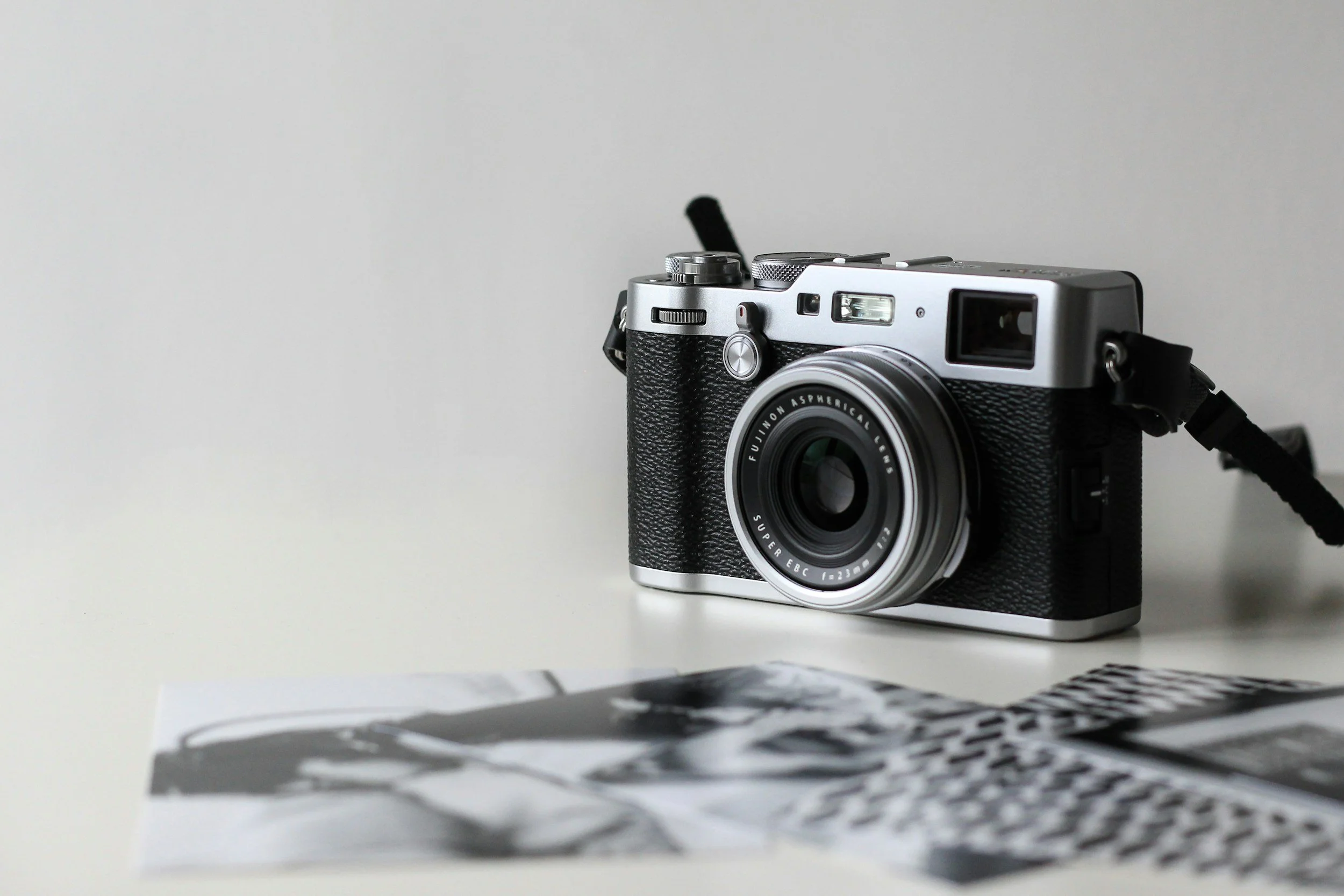
Sometime in 1949, while still in France, Vivian began toying with her first photos. Her camera was a modest Kodak Brownie box camera, an amateur camera with only one shutter speed, no focus control, and no aperture dial. The viewer screen is tiny, and for the controlled landscape or portrait artist, it would arguably impose a wedge between Vivian and her intentions due to its inaccuracy. Her intentions were at the mercy of this feeble machine. In 1951, Maier returned to NY on the steamship ‘De-Grass’. When she first came to New York alone, she went to work in a sewing sweatshop. She realised one day that she wanted to do something where she could be outside and in the world, out and about, and see the sun, so she took up nannying. She felt that it gave her a certain amount of freedom. Somebody else was providing the shelter for her. She wasn’t having to work so hard just to make ends meet, and consequently, she had some free time for her photographic endeavours. In 1952, Vivian purchased a Rolleiflex camera to fulfill her fixation. She stayed with this family for most of her stay in New York until 1956, when she made her final move to the North Shore suburbs of Chicago. Another family would employ Vivian as a nanny for their three boys and would become her closest family for the remainder of her life.
In 1956, when Maier moved to Chicago, she enjoyed the luxury of a darkroom as well as a private bathroom. This allowed her to process her prints and develop her own rolls of B&W film. As the children entered adulthood, the end of Maier’s employment from that first Chicago family in the early seventies forced her to abandon developing her own film. As she would move from family to family, her rolls of undeveloped, unprinted work began to collect.
It was around this time that Maier decided to switch to color photography, shooting on mostly Kodak Ektachrome 35mm film, using a Leica IIIc, and various German SLR cameras. The color work would have an edge to it that hadn’t been visible in Maier’s work before that, and it became more abstract as time went on. People slowly crept out of her photos to be replaced with found objects, newspapers, and graffiti.
Similarly, her work was showing a compulsion to save items she would find in garbage cans or lying beside the curb. In the 1980s, Vivian would face another challenge with her work; financial stress and lack of stability would once again put her processing on hold, and the color Ektachrome rolls began to pile up. Sometime between the late 1990s and the first years of the new millennium, Vivian would put down her camera and keep her belongings in storage while she tried to stay afloat. A free spirit but also a proud soul, Vivian became poor and was ultimately saved by three of the children she had nannied earlier in her life. Fondly remembering Maier as a second mother, they pooled together to pay for an apartment and took the best of care for her. With meager means, the photographs in storage became lost memories until they were sold off due to non-payment of rent in 2007. The negatives were auctioned off by the storage company to RPN Sales, who parted out the boxes in a much larger auction to several buyers, including John Maloof.
In 2008, Vivian fell on a patch of ice and hit her head in downtown Chicago. Although she was expected to make a full recovery, her health began to deteriorate, forcing Vivian into a nursing home. She died alone and destitute a short time later in April of 2009, but she left behind a treasure trove of photographs, kept secret for years in a room she forbade anyone to enter.
Personal life
Often described as ‘Mary-Poppins’, Vivian Maier had eccentricity on her side as she worked for a family in an upper-class suburb of Chicago along Lake Michigan’s shore.
Having told others she had learned English from theaters and plays, Vivian’s ‘theater of life’ was acted out in front of her eyes for her camera to capture in the most epic moments. Shooting from below with her camera, she gave her pictures a kind of towering magnitude.
Street photographers tend to be gregarious in the sense that they can go out on the street, and they are comfortable being among people, but they are also a funny mixture of solitaries at the same time as being gregarious. They observe, embrace, and take in, but they stay back and try to stay invisible.
Vivian had an interesting history. Her family was completely out of the picture very early on in her life, forcing her to become singular, as she would remain for the rest of her life. She never married, had no children, nor any very close friends who could say they “knew” her on a personal level. People who remember do so because she was completely different. In the 1950s, one didn’t take pictures, except during Communion or at the moment of marriage. Vivian Maier ran through the roads of Champsaur and went crazy over a mountain or someone who was working. It was bizarre.
Maier’s photos also betray an affinity for the poor, arguably because of an emotional kinship she felt with those struggling to get by. Her thirst to be cultured led her around the globe. One day, Vivian told her employer, “I’m going to travel the world, and I’ll be back in eight months.”. At this point, we know of trips to Canada in 1951 and 1955, in 1957 to South America, in 1959 to Europe, the Middle East, and Asia, in 1960 to Florida, in 1965 she’d travel to the Caribbean Islands, and so on. It is to be noted that she traveled alone and gravitated toward the less fortunate in society. Her travels to search out the exotic caused her to seek out the unusual in her backyard as well. Whether it was the overlooked sadness of Yugoslavian émigrés burying their Czar, the final go-around at the legendary stockyards, a Polish film screening at the Milford Theater’s Cinema Polski, or Chicagoans welcoming home the Apollo Crew, she was a one-person documenting impresario, documenting what caught her eye, in photos, film and sound.
The personal accounts from people who knew Vivian are all very similar. She was eccentric, strong, heavily opinionated, highly intellectual, and intensely private. She dressed like you would expect to find women factory workers in the Soviet Union in the '50s. She wore a floppy hat, a long dress, a wool coat, and men’s shoes and walked with a powerful stride. She was tall, and she was always kind of hiding her figure, wearing heavy clothes and boots. With a camera around her neck whenever she left the house, she would obsessively take pictures, but never show her photos to anyone. An unabashed and unapologetic original.
An unrecognised talent
Trying to get her work into institutions is a big problem because the art world establishment still won’t recognise Vivian’s work. Museums usually deal with the final product, the print, that was made by the artist during the artist’s life. They don’t want to interpret an artist’s work from where they left off. Gary Winogrand had a desk full of rolls of film that he never developed, so they are developing them. Eugene Atget’s work was printed after his death and ended up being acquired by MoMA, but nobody wants to do it for Vivian’s work. She did print some of her work, but it was largely not the best edit for her work; she was a masterful photographer, but printing was not her thing. But people don’t care. They’re not waiting for that validation from institutions. They are claiming Vivian Maier’s work for themselves. Her work is now in galleries in New York, Los Angeles, London, and Germany.
I find the mystery of it more interesting than her work itself. Paradoxical, mysterious, eccentric, private, she didn't have any family, any love life, or children. Being a very private person, she was always afraid of being touched. She was an incredibly watchful, observant, caring person, and probably why she was a nanny was that she had those capacities. She always had an eye for the bizarre, the grotesque, the incongruous. Vivian Maier’s photographs are tender, exhilarating, and at times unsettling. They are the product of someone who - despite her outward appearances - clearly had profound connection with the world around her. She just connected in the one way she knew how, looking downward through the viewfinder of her Rolleiflex - and the results are piercingly honest, even revelatory.
She might have gotten to the end of her life and thought, “Why didn’t I try to get that work out there?”. Some people’s character prevents them from pushing that little bit you need to push to get the work seen. She didn’t defend herself as an artist, she just did the work. Maybe this is the best way of all for her, to have it happen after she has died. That would probably make Vivian happiest, because in her own life, she would have found the attention overwhelming.
I understand a lot more about her, but why was this person so private, yet so prolific in an art form that she never shared? Who knows? She did it so it wouldn't be forgotten. Vivian knew that she was a good photographer, and she knew that these photographs were good. She wanted to show them to people, and she may not have had that happen while she was alive. She would like her artwork to be honoured, but she personally wouldn't have liked being in the limelight,
The history of street photography had been rewritten. In death, she is getting the fame that she never had in life.

Written by Alexandra Corcode
Alexandra Corcode is a photographer based between The Netherlands and Romania, focusing on documentary photography. Her practice embraces the photographic medium to create encounters and to explore territories through memories and resilience, while preserving intimacy and dignity.

Recipes