Mo Kolours: Rhythm, Resistance and Recognition
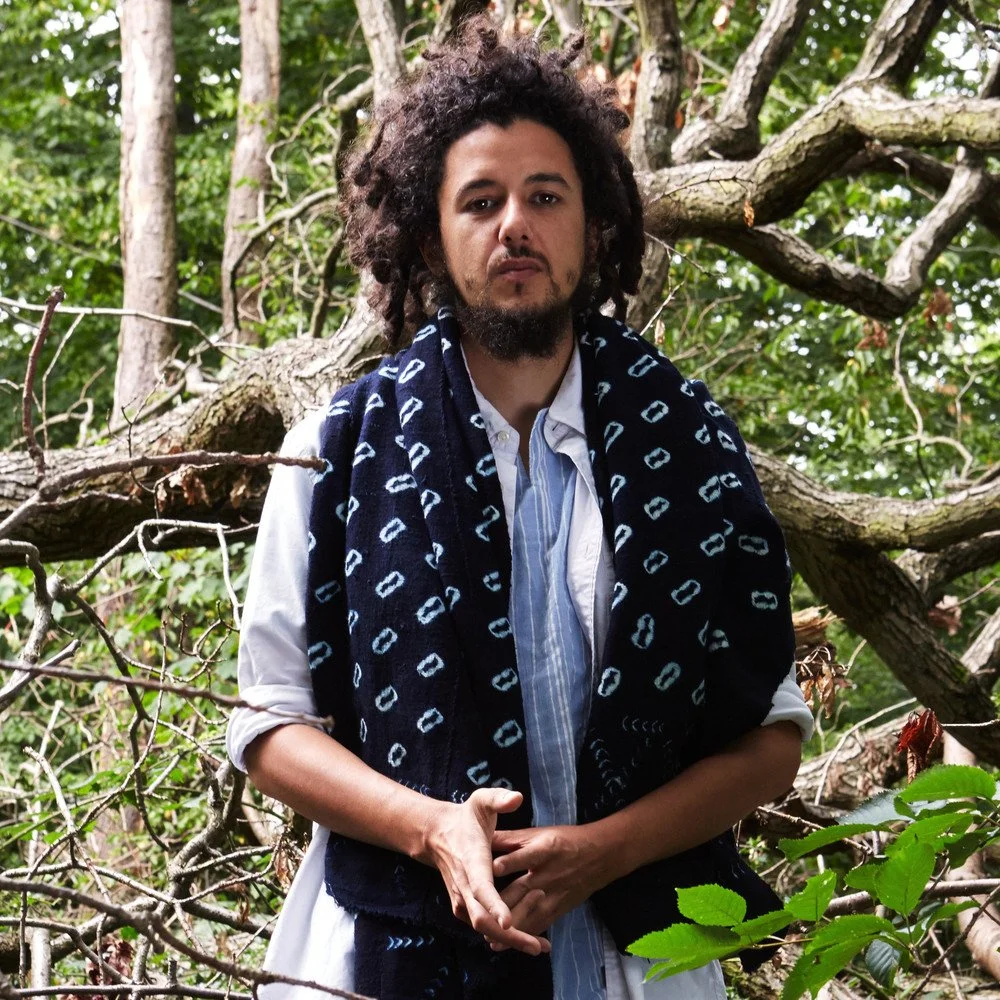
For Mo, identity was never something abstract. It was lived, in sound, in silence, in inherited memory.
Growing up in Stoke-on-Trent, with a Mauritian father, he understood early that belonging could be layered and complex. His father had arrived in Britain with hope, like many migrants, searching for opportunity and stability. What he encountered instead was racism. It was not always loud, but it was present, and it shaped his experience of settling into a new country. That reality inevitably influenced the atmosphere at home — not through bitterness, but through awareness. Survival required resilience.
Yet his father did not retreat into silence. He responded with pride.
Determined that his culture be recognised rather than sidelined, he went into Mo’s school to speak about Mauritius. He brought tropical fruits from the local Asian shop — unfamiliar scents and textures laid out on a classroom table in the Midlands. He spoke about the island’s beauty, its history, its people. In that space, difference became visibility. Heritage was not something to apologise for; it was something to share. It was a quiet but powerful assertion of identity.
At home, Sega music filled the air, a sound carried from his father’s homeland. The rhythm was constant, grounding and familiar. From a young age, Mo gravitated towards percussion. He had a natural feel for rhythm, something instinctive rather than taught. It wasn’t framed as talent at the time; it was simply what he did.
Teachers noticed that instinct early on. He was invited to perform in front of the whole school, demonstrating his ability with drums. The response was encouraging, and it became one of his earliest experiences of being recognised for something that felt completely natural to him.
Outside the home, life required negotiation. Stoke was predominantly White British, and questions of origin surfaced frequently. Racism was present. Assimilation sometimes felt necessary. Navigating different cultural spaces created tension, but it also cultivated awareness. It sharpened his listening. It taught him to observe and absorb. Those qualities would later shape his music.
As he grew older, his connection to Mauritius deepened beyond memory and sound. It became intellectual as well as emotional. Through his father’s heritage, Mo developed a strong understanding of the formation of Creole identity on the island and the brutal realities of slavery in 18th-century Mauritius. He often references Megan Vaughan’s Creating the Creole Island (Duke University Press), a detailed examination of slavery and society that traces how Creole culture was shaped through violence, displacement and survival.
He is equally knowledgeable about the Mauritian Maroons, enslaved people who escaped captivity in the mid-17th century, resisting colonial authority by fleeing into the island’s mountainous interior. Their existence speaks to endurance and refusal. Stories of hidden communities and survival against harsh terrain continue to circulate on the island today. For Mo, the Maroons represent autonomy. Resistance not as spectacle, but as necessity.
Understanding that lineage reframes Sega itself — music born from enslaved communities, rhythm used as preservation, expression and communal strength. In Mo’s work, rhythm becomes more than sound. It becomes continuity.
That continuity is audible today. Under the name Mo Kolours, his recordings carry the imprint of that layered inheritance. Sparse percussion, cyclical grooves, and a meditative sensibility define his sound. It feels elemental. Stripped back yet deeply textured, as if rhythm itself is doing the storytelling. His catalogue, available on Spotify, reflects this sensibility: music that resists excess and prioritises pulse, space and repetition. It is contemporary, but it carries memory.
Listening to his work, you can hear the through-line: the Sega rhythms of childhood, the instinctive drumming at school assemblies, the intellectual understanding of Creole formation and maroon resistance. The tracks do not imitate tradition; they converse with it. They extend it.
Returning to Mauritius as an adult transformed abstraction into experience. The island was no longer just the place described at home or heard through music growing up. It was physical. Immediate. The land held weight.

One place in particular left a lasting impression: the Pyramids of Plaine Magnien. To some, they are unusual stone formations rising from the southern landscape. To Mo, they are a strong spiritual site, grounded and charged at the same time.
On a recent visit, he climbed the steps slowly and deliberately. With each step, there was a subtle shift, difficult to explain but impossible to dismiss. When he reached the summit, the sensation intensified. He describes it simply as a force. Not dramatic. Not theatrical. Steady and expansive. As though the land itself was communicating.
There was clarity in that moment, a stillness that felt close to enlightenment. He felt deeply rooted and yet somehow expanded beyond himself. The experience lingered long after he descended. It carried enough significance that he returned the following day to climb again, not to chase the moment, but to honour it. To stand once more at the summit and reconnect with that quiet current running through the land.
Viewed through the lens of Mauritian history — slavery, maroon resistance, Creole formation — the moment carries deeper resonance. Standing elevated on ancestral soil, aware of centuries of survival and cultural creation, the experience becomes less mystical and more recognitional.
The racism his father endured in Stoke-on-Trent.
The classroom talk with tropical fruit laid out as testimony.
The early instinct for drums.
The intellectual engagement with slavery and maroon resistance.
The steady force felt at the peak of stone steps.
The recorded rhythms now circulating globally through streaming platforms.
All of it converges.
In his textured, rhythmic and reflective music you can hear that convergence. Past and present in conversation. Heritage carried forward consciously.
Mauritius, for Mo, is not simply a place connected to his father’s story.
It is inheritance.
It is source.
It is recognition.
And in standing at the summit of those pyramids, feeling that quiet force beneath his feet, he wasn’t just revisiting history.
He was standing within a continuum of rhythm, resistance and remembrance.
Find out more about Mo Kolours below.
Instagram - Spotify - Soundcloud - Youtube
Written by Sacha Purmessur

Opinion