Talking to: Foy Vance
Credit: Gregg Houston
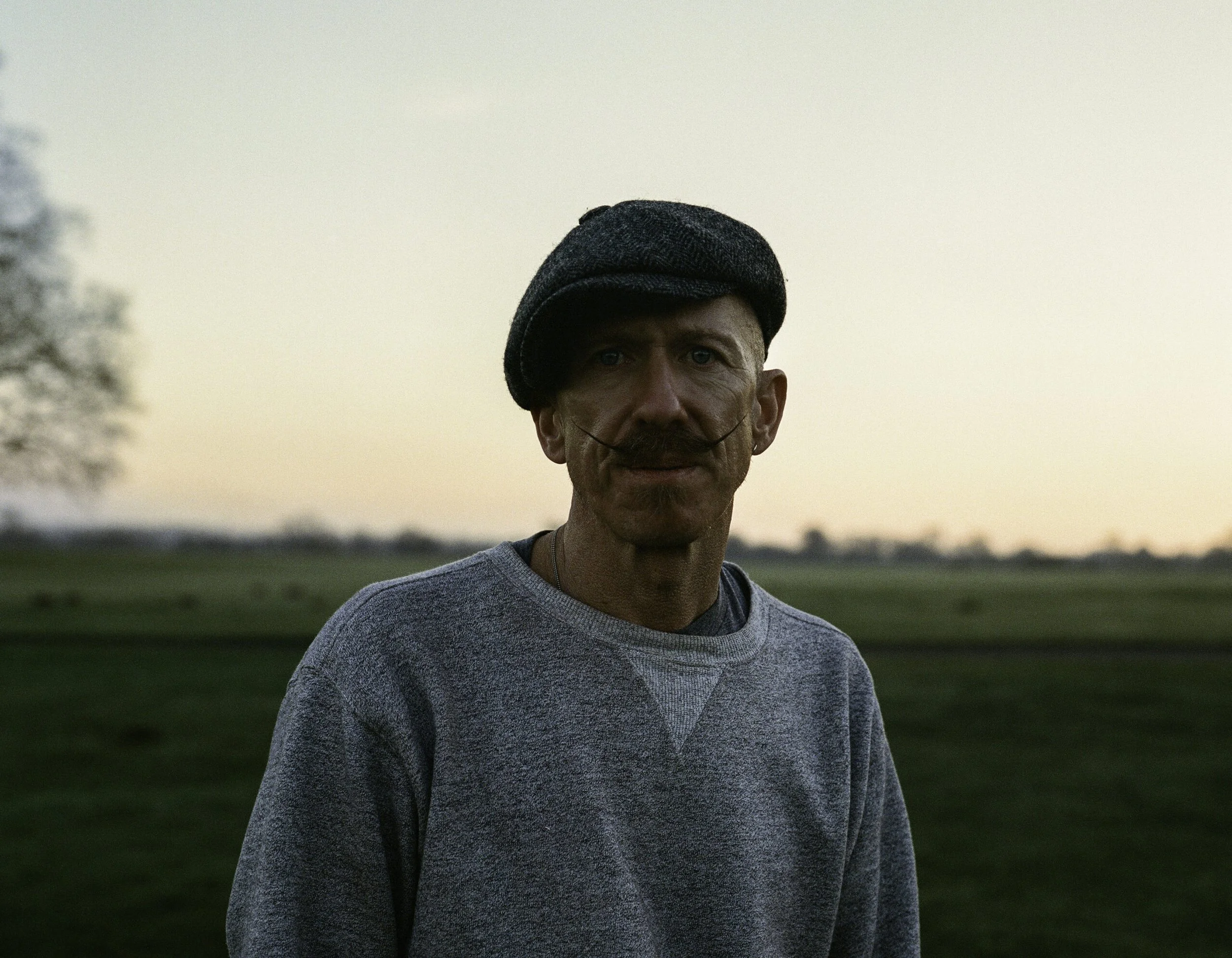
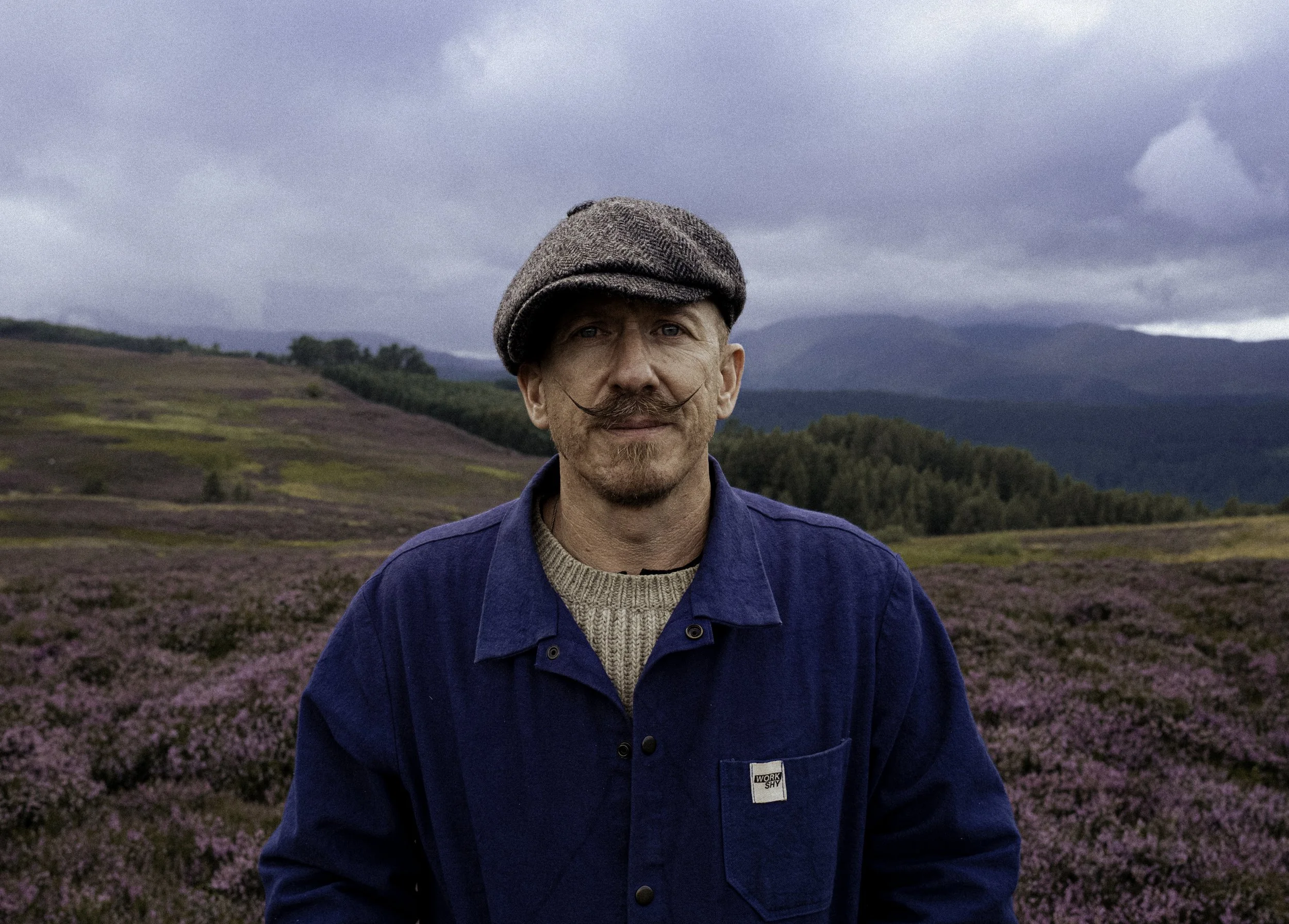
The Wake feels like a quiet exhale, rooted in instinct, shaped by time, and grounded in the understanding that sometimes the best thing you can do is simply listen. 28 years ago, Foy made a quiet promise to himself to create seven records after his father passed. Now, standing at that seventh, there is a sense of return and revival.
A lot of that clarity comes from what’s happened outside the music. Fatherhood, in particular, has reshaped the way Foy moves through both life and songwriting. He describes it simply, comparing it to The Karate Kid. “You’re sanding the floor, painting the fence, and you don’t realise you’re learning something else entirely.” In his case, that lesson is balance. “If you’re struggling to write a song, it’s because your ego’s in the way,” he says. “Music is there all the time. You just have to listen.” It’s a way of thinking that runs through the record. Nothing feels forced or overworked, more like something uncovered in its own time.
Credit: Gregg Houston
The Wake marks your seventh record. You've had a very long career, through all the changes from physical music to digital to streaming, what felt different about the creative process around making the Wake compared to previous work?
Personally, I think there's music and then there's industry. The way people perceive music has never impacted on anything that I do, in regards to creating or writing. The main change I've felt through this album is that I feel like I ended where I began. On the day that my dad died, I swore to myself that I would make seven records. I went into that first album wide eyed and bushy tailed. I thought that the world was my oyster and it's for the taking. I felt a sense of success after my first album, but I kind of somewhat lost my way and got caught up ‘in the industry of it all’. As altruistic as I might approach the format of songwriting, it’s hard not to feel like you’ve sullied the process when you have to put it on wax, promote and sell it.
Reaching this seventh album feels like a full circle moment of this personal journey I set up for myself. I made The Wake with absolutely no plans for what it should sound like or what it should be. The one and only, the great Ethan Jones, produced the album. We had reached out to Ethan to make the first album, and I don't even think he got our message. I don't think anyone could even reach him, he was so untouchable at that time. So the fact that he worked on this album, also feels like I’ve ended where I began.
Your debut single Gabriel and the Vagabond found a huge audience with Grey’s Anatomy. How do you feel like that shaped your trajectory going forward? Usually that big moment happens later on in people's careers, when they’ve had more time to shape their sound and their aesthetic. Did it push you into a certain direction or did you take that in stride like I'm Foy, I know what I want to do and create.
Definitely the latter for sure. The craziest thing was the demo of Gabriel and the Vagabond was used on the show, not the final version. So I actually got a lot of hate mail on Myspace and on my forum people said ‘where is this song? Why can I not download it? It’s disgusting that you would have a song on there and we can’t hear it again!’ So my resounding memory of that song is not that everyone is celebrating haha! But it awoke me to the possibilities of what I can achieve. I didn't know what it meant to have your song on a platform like that and then I got an email about how much they were paying me to use it.
The truth is I got that opportunity by not focusing on creating art for that purpose. I understood that you don't tend to write number ones by trying to write number ones. You don't tend to get on TV shows by trying to write for a TV show, unless you're specifically booked for it, or you're Taylor Swift and you can fart into a microphone and it’ll go number 1. You just try to do what you can do. The only thing I can really have any purchase on is the art I make, with the hope it finds its audience and its place in society.
Credit: Gregg Houston
A lot of your music contains biblical references and ideas, is that reflective of your upbringing in the Church?
If you can think of a greater work of literature than the Bible then I'd be intrigued to hear, you know it’s just amazing. It's not even about believing it to be true or believing it to be false, or whatever. But as a piece of work it's just so dense and rich, that language is so evocative. That vernacular is something that I grew up with, because my dad was a preacher, he always spoke in parables. Outside of faith, the language has always intrigued me. It shows up everywhere. It shows up in the music of Tom Waits, Joni Mitchell and Bob Dylan, in the paintings of Picasso and the films of David Lynch. It's mean, it's everywhere you look. As I say, my dad was a preacher. If my dad was an Imam, I'd be talking about the Quran. If I was Nordic, I'd be talking about Thor and Odin! But I have nothing to sell anyone, no axe to grind, it’s just a framework that resonates with me and makes sense to me.
I never fully realized quite how much of an impact my dad's faith and vocation had on me. It’s very strange to have a father that's a preacher, because that's a strange role to inhabit, people look to you as some kind of moral authority. They think that because you're a preacher's son, you could obviously never do any wrong but if you've met a preacher’s son, it's usually quite the opposite!
What was it like to win an Emmy? By the sounds of it probably wasn’t the most important thing in your life!
Like icing on an already sweet cake, a third kiss on the cheek. It was sort of superfluous, I just didn't expect it. I wrote the song for Ted Lasso and completely forgot about it. Then I got a text from my manager saying, "You've been nominated for an Emmy." I thought, "What have I done now? I've got the Emmy for being late or for not responding to an email”. When I got to the ceremony I thought the people beside me had won it because the guy was sitting there writing a speech. I thought oh I've definitely not won tonight, so I started to relax. Then they said my name. I really didn't expect it but it's a beautiful thing. The thing I like about the Emmy is the joy that it seems to bring to people, everyone that sees it wants to hold it. Afterwards, when I was doing the press junket, this woman said “wow, what does it feel like?” I just handed it to her and said “you tell me!”
What's your favourite song in the new album?
I think I'm not celebrating, just because it started as a breakup song, but by the time I recorded it, I realised that it wasn’t. It was actually very closely linked with the concept of wakes. It marked the end of this personal project, but the beginning of what is next, a sort of renewal cycle. I actually had to remove a word from that song so that I could sing it authentically. That transcendental quality of the song wasn't there until I removed the word ‘If’, like the poem by Rudyard Kipling. My father used to read that poem to me all the time, so that song is probably the most pertinent on the record for me.
The Wake carries a lot of emotional weight, tying into Irish culture. What does the Wake mean to you in the context of this album?
As an Irish person, a wake is not the time not to commiserate the death of someone, but more to celebrate life. You get together and you raise glasses, you sing songs, remember stories, and laugh. There’s a lot of celebration and a lot of laughter at Irish funerals kind of like in New Orleans. So I guess this album is a celebration, it was me ending the journey, putting the final nail in my dad's coffin, so to speak. I feel like for those seven albums, I had my blinkers on with my head down, walking down a very narrow road.I turned down a lot of opportunities that maybe could have been better for me career wise, because I wanted to stick to the path that I was on and that felt better. As the great James Baldwin once said, ‘the quickest way to anything good is slowly’.
Written and Interviewed by Melvin Boateng
Opinion