Talking to: Marlon Williams
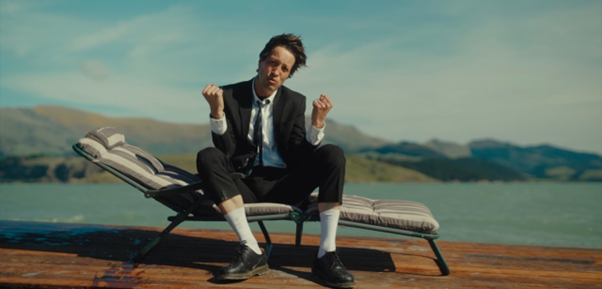
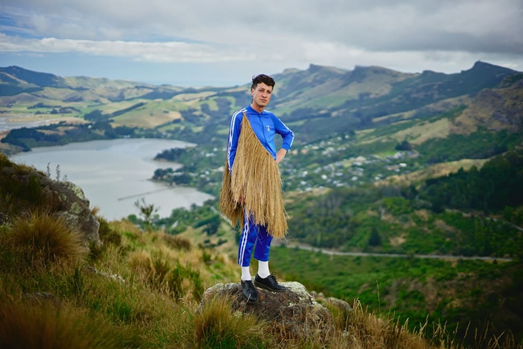
Sitting down with Marlon Williams, at this point in his career, feels like entering the very ‘whare’ he has built with (The Messy House), a space alive with introspection, warmth, and spirit. For the New Zealand born singer-songwriter, his fourth album marks not only a musical return to form but also a deeply personal reconnection to language, ancestry, and identity. As his tour brings this radiant body of work to audiences around the world, Marlon opens up about the power of language, and the creative journey that led him here: one shaped by solitude and community, tradition and experimentation, grief and joy.
You’ve probably been asked this a million times, but why did you decide to release a Maori album and what were your ambitions?
It's certainly come at an interesting time in terms of New Zealand national politics, but it's been a long time in the works. I think for me, in the most personal sense, I was struggling to write songs in English, and I came up with this one song ‘Aua atu rā’ that was sort of the prow of the canoe that allowed all the rest of the music to flow out of. That's the thing with albums, for me, once you have that one hallmark song, then you're encouraged to keep going and follow, one foot after another.
Interestingly, ‘Aua Atu Rā’ was my first introduction to your music, and it was your first song in Maori, the music video was captivating!
Oh wow, really! That’s good, what an interesting first song to come across, that’s an intriguing perspective.
What was it like to have your long-time collaborator and friend, Lorde, on the album singing Maori?
Well, as this big pop star, it was an interesting move for her to release a whole EP in Maori. But, as her friend and as a fan of hers, I was just so bolstered and warmed by the fact that she was recording so beautifully, and having these translations made. I thought it was a very bold move for a pop star to do. Then she asked me to sing on the EP, so I did.
She said at the time, if you end up making this Maori record you know where I am. So that collaboration really informed the writing of “Kāhore He Manu E”, because I was like, well, I've got her voice in my mind. Where's it gonna take the writing? And then that's what came out.
Maori is a very expressive language. Do you feel as though singing in Maori was able to express things you never could express in English?
I think, you know, the medium makes the message. There were new tools. I really relate it strongly to playing guitar your whole life as you know that your fingers are gonna go to an A minor chord, a C chord, a G chord, or whatever, then you go to a piano and your fingers don't know what to do. It's such a great thing to have, for your brain to have one extra little step where it has to rethink things from basic principles again. So there's that level, but then the other level is that because I'm not fluent in Maori, I'm able to hide behind things and construct things in silence and darkness, that I can then bring out. It's kind of weird, but knowing that people don't understand Maori, I'm able to say things that I would feel embarrassed to say in English, which is bizarre.
Listening to your album and hearing you sing live was quite an emotive experience, there was a strong sense of home, even though I do not understand Maori, the inflections and rhythmic cadence is extremely engaging.
You'll know this as a linguist, but when you're engaging with a new language, the novelty has its own power. There is a big difference between knowing one language and knowing multiple. When you know one language, you're really just thinking about the basic things of how to communicate. When you know another language, you understand the arbitrariness of the sign, and you really understand something about what language is. You don't understand that when you only know one language.
It’s almost like you’re just living in one dimension, and you’re not even aware of a second or third dimension of language existing.
Exactly, you’re not forced to confront what’s really going on. It’s a fascinating experience to go through.
So someone I was sat next to was from New Zealand…
….Yeh, I bet! Haha.
Haha, I might be the only British person here! But they were saying that there’s been a ‘Maori renaissance’ in recent years with younger generations attempting to learn and speak Maori, have you felt this shift?
Yeah definitely, I mean, it's no coincidence that in the 80s and 90s, New Zealand went through a revitalization and got in on the ground level with children, and we're now all growing up. I didn't go all the way on that journey, but I've got many friends who were first language Maori speakers, which was unheard of, you know, for the 100 years before. It's beautiful, because I dedicated this album to Hirini Melbourne, a songwriter who was responsible for a lot of the songs that were part of that movement, and she knew that songs were the best way to get the language moving forward - so it's really exciting now. And I've sort of forgotten, well not forgotten, but you go out and live your life then you realise, oh, there's all these Maori songwriters and poets and writers, where did they all come fro- ah I know where they came from! That whole thing was announcing the fruit of it.
It’s an interesting phenomenon, because there aren’t many instances where a language has that revival in the younger generation but their parents' generation can’t speak the language!
That's it! There are a few songs on the record that are about making sure that we don't judge the past generations for something that has been put upon them - the disposition is not their fault. The vertical transmission goes back the other way too, you know, and the understanding goes back the other way.
Why did you choose to perform your London dates in St. Pancras Church?
I think it was just booked by the booking agent haha - but i’ll tell you why I like it. I grew up singing in a choir, in a Catholic Cathedral Choir, so walking in and just smelling the Frankincense is like a very homey, homey feeling for me. I mean, I really like rooms where you can hear what's going on at the very far end, even at a gig, it just makes you feel very alive. You also have that hush sort of ASMR intimacy that’s so nice, I love it.

Opinion