Talking to: Rosemary Wylde
I’m always excited to explore new music and meet new artists, but when I got the opportunity to talk to Rosemary Wylde — someone who is creating her own path for her music without the use of social media — I jumped at the chance. I recently chatted with her about her upcoming second single “Raise Up Your Banner”, her upcoming album “Peace Revue”, and about growing up on the London protest scene.
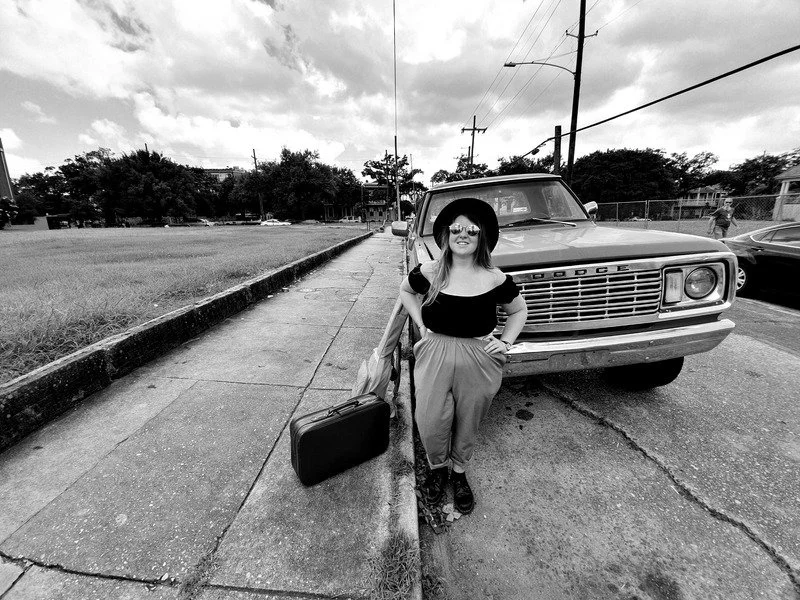
Rosemary Wylde, I can’t wait to talk about the upcoming second single, but before that, let’s start with an icebreaker question. If you could step into any album cover and live there for a day, which one would you choose?
Oh, that’s a great question! There's this really scary album cover by King Crimson called “In the Court of the Crimson King” and it's actually quite famous. It's very psychedelic, and it's like a painting of this pink man's face screaming. And no one really knows why; it's just bizarre. I think I would step into that just to experience it, because it'd be intense. But maybe I could also find out why they chose that as an album cover.
Okay, so let's jump into the upcoming second single, ‘Raise Up Your Banner', which is being released on October 2nd. Congratulations for that. This song was written years ago during your upbringing in the London protest scene. So how has the meaning of the song evolved for you between when you wrote it and releasing it now?
I wrote it at a time when there was a load of upheaval politically going on in London; I grew up around it also. I was very aware of everything that was going on, and I was quite involved with it as well. Obviously since then, so much has changed but this song still gives me the same feeling. It still feels relevant, especially now as I feel so many people are looking for symbols of peace or unity.
The song is described as capturing the grace of standing for peace rather than just chaos. So how did you approach writing about protest and peace in a way that emphasizes dignity and hope?
So, at the time when I wrote the song, I was becoming very politically active and taking a stand against things that I really don't agree with. In the media, I always saw protests portrayed as chaotic and aggressive but, to be honest, when I was there, all around me I saw grace and dignity. I felt like this more stoic sense of protest isn't really being captured anywhere — the media's certainly not capturing it — that's what I was experiencing firsthand. So this song was to represent that side of protesting. I feel like that's where it came from.
Your singles ‘Peace’ and ‘Raise Up Your Banner’ are part of your debut album Peace Revue. Can you tell us about the larger vision for the album?
All the songs have a similar feel because they all explore and wonder about what else might be out there.Towards the end of the album, there's a song called ‘Going South’, and that's about me leaving London and heading south, out into other countries in the world, which is then what I did. It's slightly autobiographical in that it's describing that transition, the build-up of tension, trying to find peace through it, and then ultimately leaving London at the end of the album. It's one chapter in many ways.
The title ‘Peace Revue’ feels both reflective and quite theatrical. What does it mean to you personally?
The title came out really naturally, actually. As soon as I asked myself, what do I want this album to be called ‘Peace revue’ came out straight away; like a gut instinct. It's a review of the situation and if there's peace there, but 'revue' because it's a show as well. I wanted the listener to have a little think and question.
You recorded the album live in an empty church in Easton. What was the experience like and how did the space influence the sound?
Every song in my album is actually done like this! For me, that was so that I could access a personal space energetically. I had taken some other recordings in studios previously, and when I listened back to them, there was just something missing for me, and it wasn't about the pitching or the timing or anything, it was this other hidden layer. I think that comes from me subconsciously performing for the sound-tech. So I wanted to record on my own so that it was really about me being in the song; I felt I could go in deeper. I'm also passionate about natural reverb. I think if you can hear the room, then you can also hear the energy that's happening when that person's recording that song. So I went to different churches and asked different people, can I please use your space? This space was really open to that.
And was it important for you to capture that raw, live feeling rather than layering tracks in the studio?
Definitely. My favourite recordings from the 50s, 60s, 70s, are all taken live. If I think about my favourite songs, the ones I play endlessly, they are all recorded live.
As you mention the music of the 50's, 60's and 70's, how do you balance tradition and modernity?
So many of my favourite songs from the past have a timeless feel to them. I feel like there are certain things that people struggle with that are universal and will always experience in some ways.
You've chosen not to promote your music on social media as an act of protest, which I have to say I absolutely love, because as a creative myself, I find that it takes away a lot of the creative process joy. So what does that decision mean to you and how has it shaped your relationship with your audience?
It means a lot to me, actually, it’s something which I'm not going to waver on at any point, no matter how many people have tried to convince me otherwise. My music represents values - connection, integrity - and I don't think it makes sense to promote that music in ways that don't match up to that. I've never been on social media as an artist because of the reasons you're saying and I feel like a connection between artist and fan should be direct. Social media becomes a middle man, and artists end up having to create posts that aren't about art - it's about keeping up. It feels unnecessary, and it liberates me to cut out this step. My connection to my fanbase is direct and organic, and I'd like to be able to pave the way for other artists to do the same. I would like to be able to inspire a change long term in the industry, so that eventually people booking acts and putting things on are not only looking at social media, but they’re also really looking at the artists, the craft, the music fan base and all the things which I think are really important. I would love for that to be the case.
And that actually is a very good segue into the next question. You came onto our radar via the guys of A.D Scruffs - lovely guys who you have shared a stage with. Who are some of your biggest influences in folk and Americana, and how did they inspire your approach?
A big influence for me was Joe Strummer, he represented that early London protest/punk “I'm going to stand up for what I believe in”. I listened to a lot of his music from a really young age, and he felt like a father figure to me. Another of my biggest influences does have to be Bob Dylan, who I heard through my Mum. She played me one song from him and I knew then what my path was going to be with music. It all just made sense once I'd heard him. The next day I got a harmonica... and he has continued to be a massive influence! Pretty soon after that, I was introduced to Delta Blues, through a collection that my Dad had called ‘An Introduction to the Delta’. I heard some tracks from that, and I was so mesmerized by the rhythms, I just found it put me in a trance almost. I would listen to them obsessively, all night. That combination of rural Delta blues rhythm and then Dylan’s messages, that really influenced me.
You have a release show coming up on October 1st at the Bristol Folk House. So how are you approaching stepping into the spotlight for this release?
I've been promoting for the show in my usual ways, I'm all for physical promotion and advertising. I love postering. Again, I think about what I would want to experience. So when I see posters that excite me around, those are the shows that I go to. I have also been thinking about creating set lists. I open every show with an acapella song. I'm going to be going to the church that I do recording in to rehearse that, because it puts me in the zone.
With “Peace Revue” coming out this winter, what's next for you? Do you envision touring or collaborating or new sound exploration?
So, I definitely have got some touring in mind. I would like to take it on the road, to play it in some different cities, towns, and places and some different festivals, to celebrate that release. Then a little bit further down the line after that, I already have my second album lined up, which is going in a more bluesy direction.
That sounds really exciting. Thanks so much for time and energy today and I wish you all the best for the upcoming gig and single. I can’t wait to hear the new album.
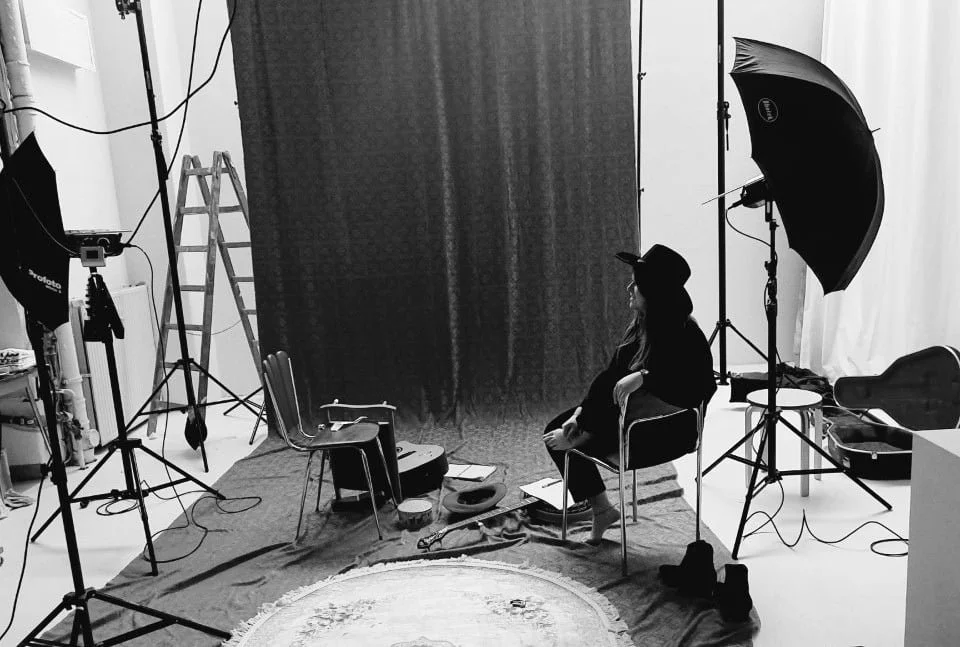
You can see Rosemary Wylde live on 1st October at The Bristol Folk House with a 7pm start. Tickets are available on Headfirst, Folk House website, or on the door. “Raise Up Your Banner” is available on October 2nd via Bandcamp, Spotify and all other music platforms.
Interview by Rochelle Hanslow
Opinion