Mark Cosgrove and Cinema rediscovered
Mark Cosgrove found me with a warm handshake, a hello and an offer to buy me a coffee. Amongst other things, he works as a curator at the Watershed, which he joined back in 1994 and is the founder of Cinema Rediscovered; an annual film festival that, in the Watershed’s own words, is “dedicated to the rediscovery and revival of great films”. It is that festival that is the subject of my meeting with Mark today. I had reached out as I wanted to discover more about the festival and, well, how exactly do you rediscover a film? And how do you know if it has been lost in the first place?
Mark was incredibly easy to talk to, as is often the case when speaking to someone who is so passionate about the subject matter at hand, the conversation flowed, and the questions in my notebook went out the window.
“My day job was programming the cinema; I just noticed that we were getting really good audiences for showing older films”, Mark said when I asked him about the origins of Cinema Rediscovered. “In particular I remember screening a thirty-five-millimetre print of Sergio Leone's Once Upon a Time in the West, and Cinema One was packed, you know, it's 200 seats, and it was a real buzz, and you know, the buzz was around seeing the film but also seeing it on film and that was great”.
Cinema Rediscovered is in its 10th year, which, as Mark says,
“sort of marks a milestone and suggests that audiences have an appetite for it”.
As we spoke about the genesis of the festival, Mark began telling me about the inspiration for Cinema Rediscovered, of which the principal spur was Bologna’s Cinema Ritrovato Festival.
“This was 15 years ago or more, when we were still part of Europe, and we were a member of this network, Europa Cinemas. As part of that, we worked with Europa Cinemas to run what were called development labs”.
These development labs took Mark to Bologna and the Cinema Ritrovato Festival.
“One of the films that I remember was Dennis Hopper's Easy Rider, seeing that in the open air, in a square, surrounded by two churches, you know, and it was just magical”.
The festival, which is now in its 40th year and screens films from morning to night over 9 days, including at some auspicious locations such as the Piazza Maggiore, where Mark saw Easy Rider, is a cinephile’s dream to boot.
“My sort of road to Damascus moment was when I went to see a screening of John Ford's film, My Darling Clementine. I don't know if you know it?”
Mark asks. I hadn’t, but funnily enough, I had added it to my Letterboxd list the night before; was that fate?
“It was a restoration that the studio had done. And this was one of the first screenings, and it was in a 500-seat cinema, which was filled. One of the directors of the festival introduced it by saying, ‘This is the greatest American film ever made!’ And that was it. And as the house lights went down, I thought, what's he on about? It's not even John Ford's greatest film. You know, because The Searchers is quite clearly John Ford's greatest film.”
However, watching the film for the first time on the big screen, surrounded by others who were sharing that experience, sparked something in Mark.
“By the end of the film, I thought, well, he might be right. You know, it could be the greatest American film. So, you know, it sort of started me thinking, that provocation, well, what is a great American film?”
The idea that a film made in 1946, a film that he had seen before, could encourage new dialogue when watched afresh in a cinema space sparked in Mark a want to create more instances where audiences could have these conversations around old films.
“You know that kind of history of cinema was getting a new audience and was being presented in a way that made it feel new and fresh”.
And thus, Cinema Rediscovered was conceived.
“Let's put this whole show on here! Let's really do a festival of older films; they're being restored, they're being represented, and actually they're being rediscovered!”
The “rediscovered” aspect of the festival is what fascinated me the most; how do you go about discovering these lost films, where do you find these hidden reels, and how do you get them to the Watershed? An amazing example of this and how the festival works to find and screen lost films can be seen in their featuring of Leslie Harris’ Just Another Girl on the I.R.T. Having been originally released in 1992, the film made waves at Sundance and went on to win the Special Jury Prize, drawing the attention of Miramax, who wanted to distribute the film. This made Leslie the first Black female director to achieve a wide-release distribution deal.
“It was a young black woman who was pregnant, living on what they called the neighbourhoods in New York, but it's told from a woman's perspective, directed by a woman, […] But this was the kind of time when Tarantino was coming through, and Coen Brothers, you know, Steven Soderbergh, all these directors who are men, white men.”
The team wanted to show this film as part of a strand they were doing on female directors, so they tried to track down a copy of the film.
“You just do research. Where was the last time it screened? And then you find out, and then you read, and then it’s “oh, you've got to speak to Leslie!”. Oh, right, okay. But you go, “what!?!, there's only one 35-millimetre print, and you've got it!?!”
After speaking to the director, Leslie Harris, the team at Cinema Rediscovered found out that there was, in fact, only one 35-millimetre Print of Just Another Girl on the I.R.T. in existence, and it was under Leslie Harris’ bed.
“And so, to get it, it had to come with her. She brought it. She brought it to the festival. And we were like, that's just extraordinary”.
Not only is this an amazing story, but it showcases the very important work the festival does in ensuring older films are kept alive and given the attention they deserve.
“Since then, it's been brilliant because it's been digitised and it's now being released in digital format. But it's that thing that I hope the festival can support and help raise the profile and make a case for these kinds of things”.
It must be quite an exciting and daunting challenge to have such a broad array of material to pick from when choosing films for the festival, I mused.
“Cinemas got a pretty impressive back catalogue, full stop. And the other art forms celebrate their back catalogues. I mean, if you went to any of the Tate galleries, you'll see back catalogues, a retrospective of Tracey Emin or whoever. You'll go and see a new production of Brecht's Mother Courage, this dead playwright, who wrote his play in 1950. Nobody bats an eyelid about that, but, you know, somehow older films and the cinema…”.
Tailing off at the end introspectively before coming back to admit that he thinks attitudes are shifting, which is both championed and evidenced by events such as Cinema Rediscovered.
With that in mind, I asked Mark whether there were any films that we should be looking out for this year. The first film he points out is a film called Jackal of Nahueltoro, a 1969 Chilean New Wave film shot in black and white.
“I would never have come across it unless Maggie, this program curator, had been working with the Chilean Film Archive and said, Would you be interested in spinning it? And I watched it, and I just thought, well, this is... an extraordinary film”.
Based on an actual murder case that inspired debate over the death penalty in Chile, the film tells the tale of José del Carmen Valenzuela Torres as he reflects on his acts from a prison cell before facing a firing squad.
“It speaks to a kind of political moment in the late 60s that was happening around the world. And we often talk about French cinema at the time and other cinemas, but we've not really talked about this sort of Chilean cinema. And as I say, it's amazingly filmed.”
If you would like the opportunity to experience some of these amazing rare, rediscovered and restored films (including 17 UK premieres) firsthand, the festival takes place from Wed 22nd until Sunday 26th of July. It’s an opportunity to watch some incredibly amazing films that you may never be able to catch in the cinema again; and who knows, maybe the very 35mm reel you are watching was, until recently, hidden under someone’s bed.
Written by Angus Cawood
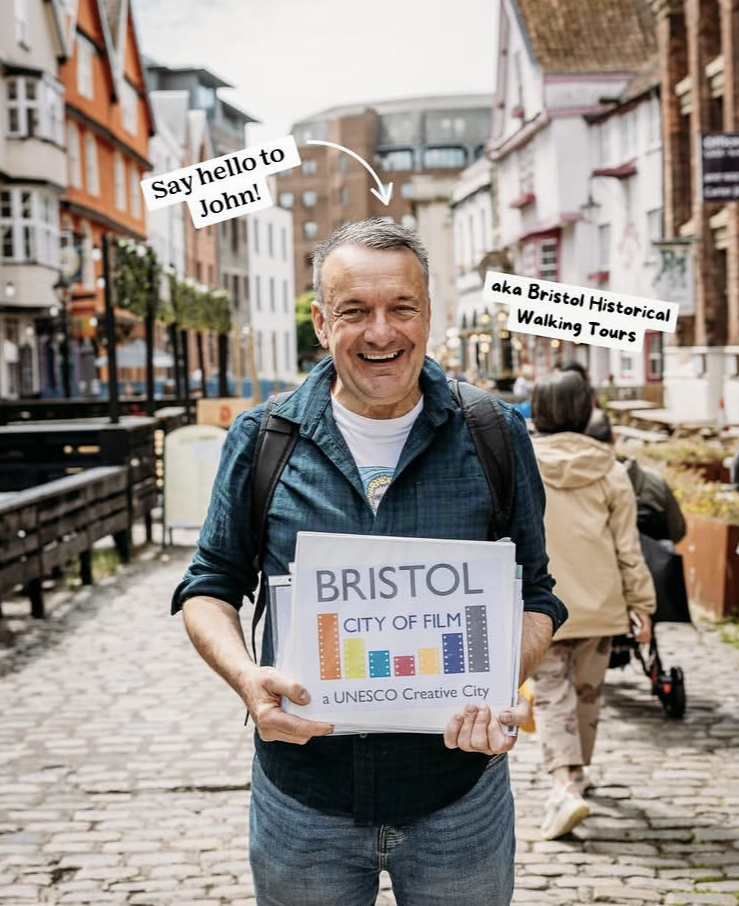
Cinema Rediscovered takes place at venues in and around Bristol UNESCO City of Film from Wed 22 - Sun 26 July 2026




Recipe