This is our land: A review of Our Land, directed by Orban Wallace
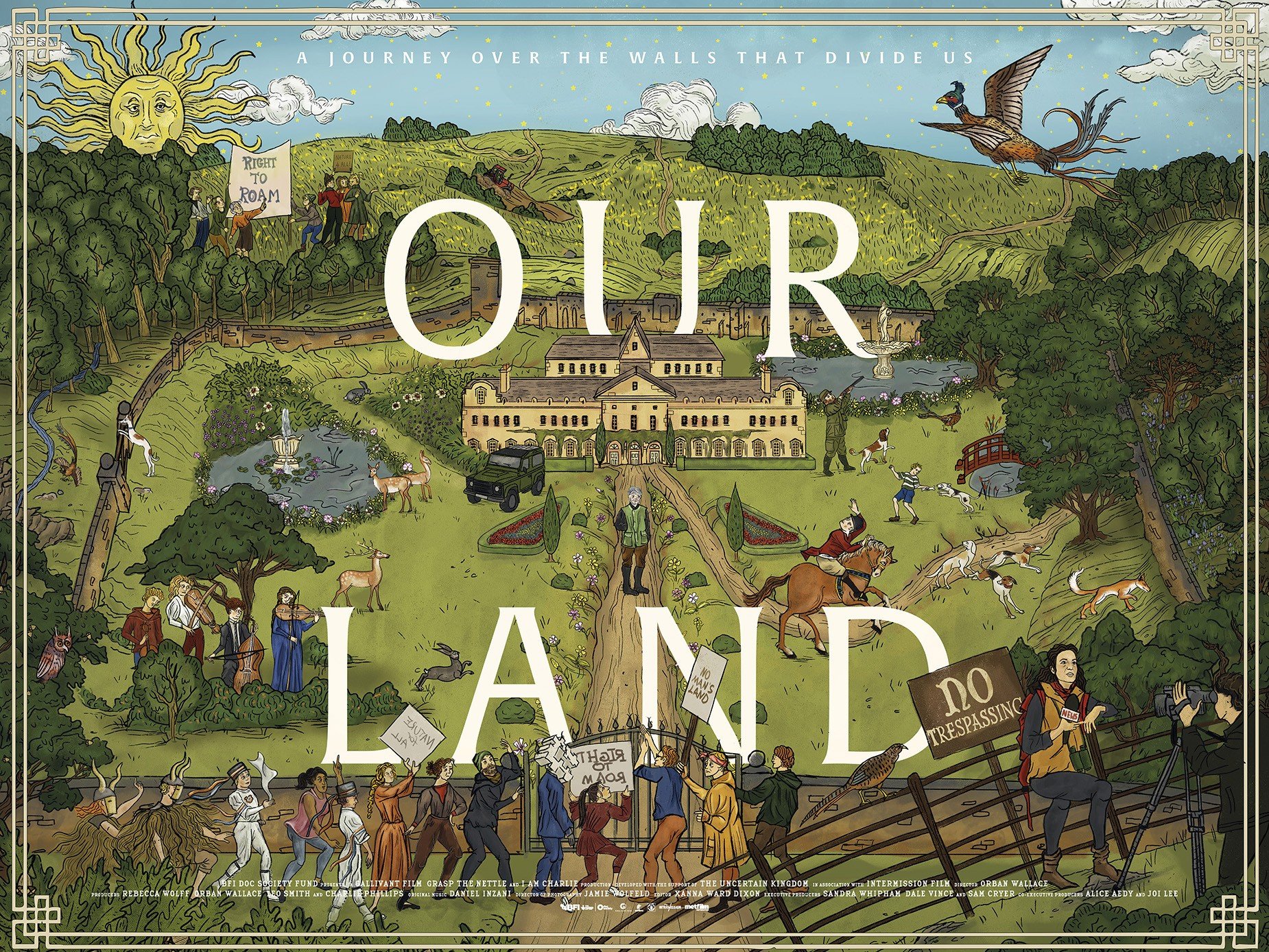
A centuries-old tree that has witnessed it all. This is how Our Land (2026, Orban Wallace) begins. Through May Kindred Boothby’s beautiful animation and words by renowned nature author Robert Macfarlane, we are taken through the history of land ownership in England. Dissected and cut into pieces by William the Conqueror after his coronation in 1066, our land was gifted to Norman barons and soldiers in exchange for loyalty, services and taxes. Roughly 960 years later, we are still feeling the effects of this one man's decision. We don’t blink an eye at the idea of someone being punished for trespassing in a field, a forest, or on a beach; it’s illegal after all, and who are we to question that? But should this change? Do we deserve more? Our Land aims to answer these questions.
“This is my garden. And it’s fucking big.” It was delivered immaculately. I felt laughter spill from my lips, but I complemented it with an eye roll. It was the perfect way to start a documentary about an organisation working to bring the Right to Roam to England and Wales. Also known as ‘Freedom to Roam’ or ‘Everyone’s Right’, this act is the “general public's right to access certain public or privately owned land, lakes, and rivers for recreation and exercise.” In short, it’s giving the land back to the people. But before we discuss said people, let’s have a peek behind the curtain of privilege to hear from some of the lucky few, starting with the man with the fucking big garden.
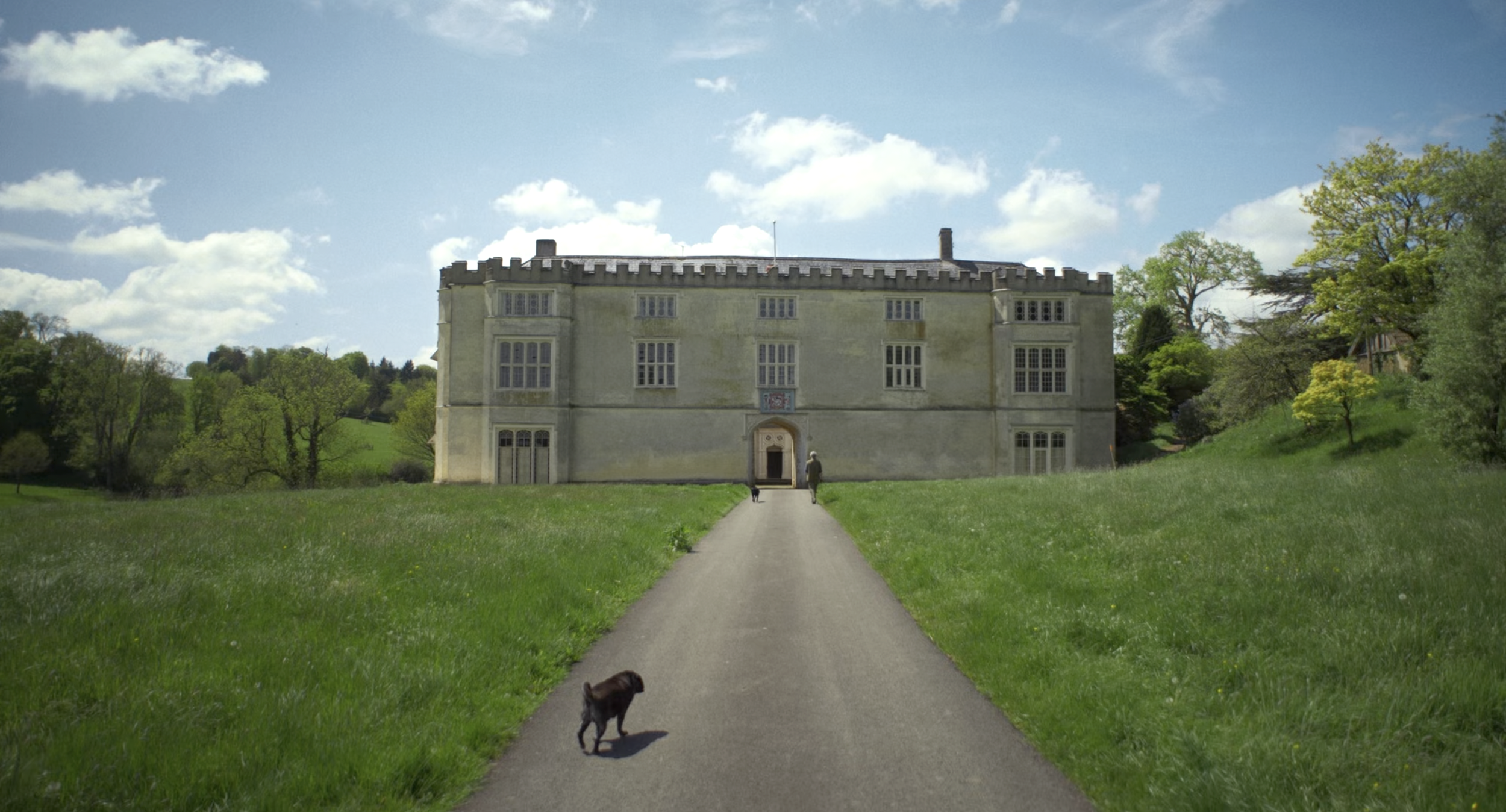
Fulford’s house
Landowner Francis Fulford (along with his disobedient pup Sheeba) gives us one end of the spectrum of debate on land ownership. Fulford believes that the land he owns is rightfully his from both a legal and moral standpoint and is quick to suggest that ‘the people’ would ruin the land had they the chance to. The land under his name has been in his family since 1066, and he rarely allows members of the public to access it–more on this later. He was outrageous to the point of caricature, unashamed and classist; he sees himself as a worthy custodian of the land which would otherwise fall into uneducated hands. To that end, it is fairly easy to see him simply as blinkered and ignorant, with no idea of what life is like beyond the many acres of his land.
When the documentary brought forth a couple more landowners, I braced myself for the worst, but was confronted by John Mildmay-White and Hugh Inge-Innes-Lillingston. I was shocked to see that White was pleasant, curious, and ultimately excited to be a part of the documentary. There was even a moment where he introduced his father-in-law, who said something along the lines of, ‘You know they’ll just make you look like an upperclass twit?’ White laughed off the comment and replied that he was interested in the debate. He answered questions, was humble about his origins and future and open with his anxieties about not wanting to be the generation to lose his family's land. Lillingston did share some similarities with Fulford, but ultimately had conflicting views on his role as a custodian over such a large area of land that was once common ground.
In fact, the further into this documentary I got, the more surprised I was at the breadth of perspective represented. Waving an angry fist towards social media, I’m not afraid, but maybe slightly embarrassed, to say that I, like many others, can live in a bubble. I assume that a larger percentage of the UK believes that climate change should be stopped, that equity is the way forward, and that socialism could be the saving grace we all need. Sometimes, this bubble is popped, and I’m rudely slapped awake to a reality where people choose to vote for reform and stay silent when AI data centres are built over protected green spaces. Our Land popped my bubble in a very different way. It wasn’t so much a rude awakening as it was a sharp reminder. A reminder that to assign people a label of good or bad does us all a disservice. White was the antithesis of every stereotype I would assign to a landowner, and proved that maybe not all landowners are actively or consciously working against the people. They aren’t all bad people. This documentary could have fought its argument by insulting and labelling them all as such, as White’s father-in-law suggested they would. They didn’t. They came at it informed and with integrity.
This surprising openness to this documentary forced you to understand why these men were so protective of their land. For years, they’ve seen these shady expanses of woods, these rich earthy-green fields, these clean, babbling rivers as their own. They’ve protected them, upkept them, aged and brought up children in them. Not only do they clearly treasure the land they own, but it has been passed down from generation to generation of their family. They are just a single breath in the history of this land’s ownership. To give it up could feel like giving up their family history. Their inheritance. Their story. And why would they do that when they could pass it down to their children in turn? Landowners Hugh Inge-Innes-Lillingston and John Mildmay-White brought these arguments forward, whilst acknowledging the strangeness of owning land and excluding people from accessing it.
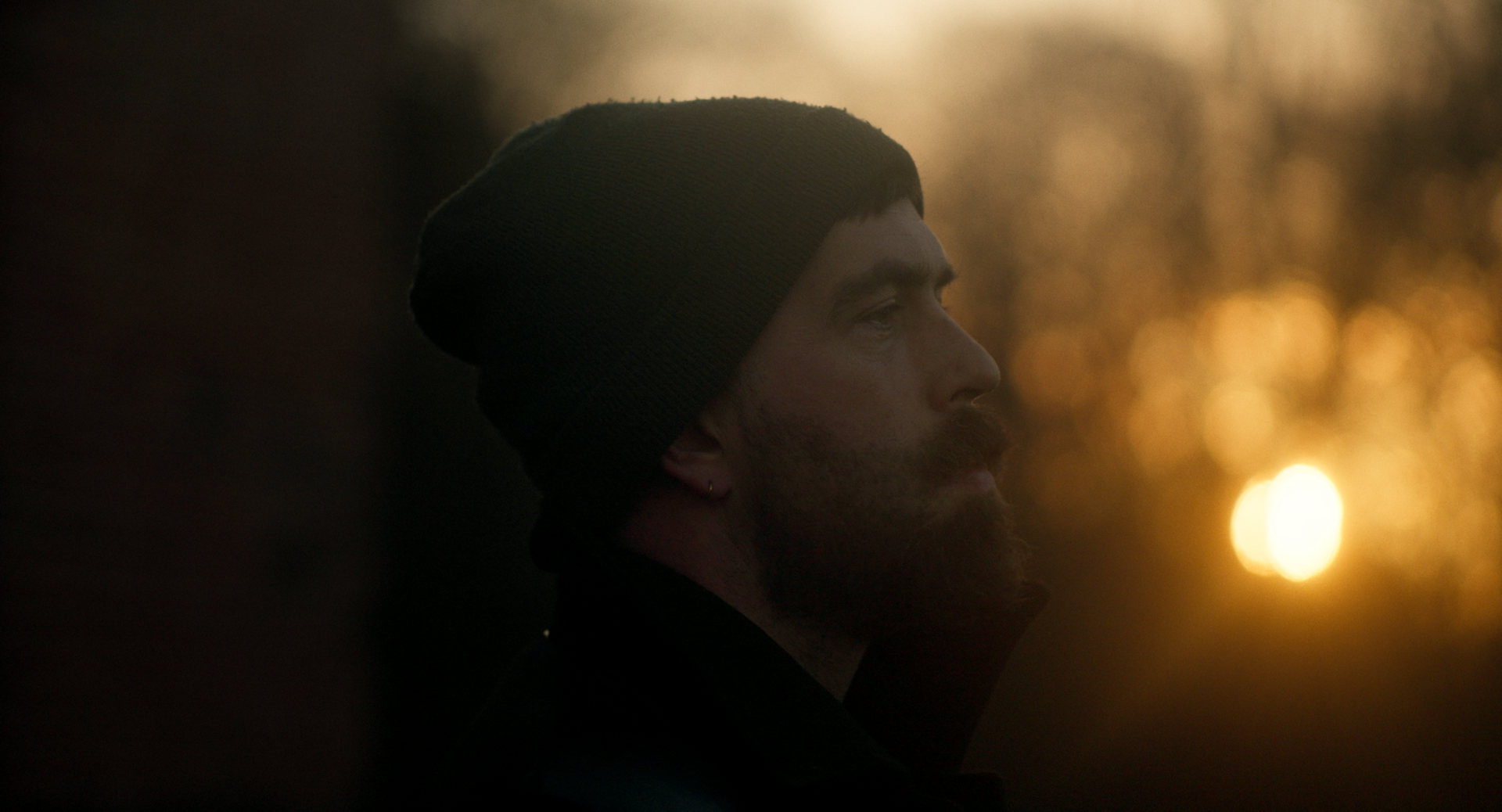
Nick Hayes, Campaigning Author & Co-Founder of Right to Roam (alongside Guy Shrubsole)
Arriving at the other side of the debate, we are greeted with footage from Trespassing Protests, dances, events, and we’re introduced to Right to Roam campaigners such as Naturalist and Conservationist Nadia Shaikh and Campaigning authors and co-founders Guy Shrubsole and Nick Hayes. One point was unanimously brought up by each of them: Why should people be excluded from the land when all they want is to access nature? Around 90% of England is privately owned; half of this is owned by less than 1% of the population. This gives the general public little wiggle room. Have you ever gone on a beautiful countryside walk, only to be stopped in your tracks by a barbed wire fence or locked gate with a ‘Private land. No trespassing.’ sign flashing out at you? That is the product of England’s lack of public land. One argument given in support of private land is that these landowners protect it from the general public. Our good old prejudiced landowner Fulford claimed that the majority of the general public are idiots who can’t be trusted to be responsible with England's wildlife. But what gives him the right to decide that? Do we assume that his wealth and lineage give his opinion more standing than working-class people? I think there’s a word that describes this type of outlook…classism.
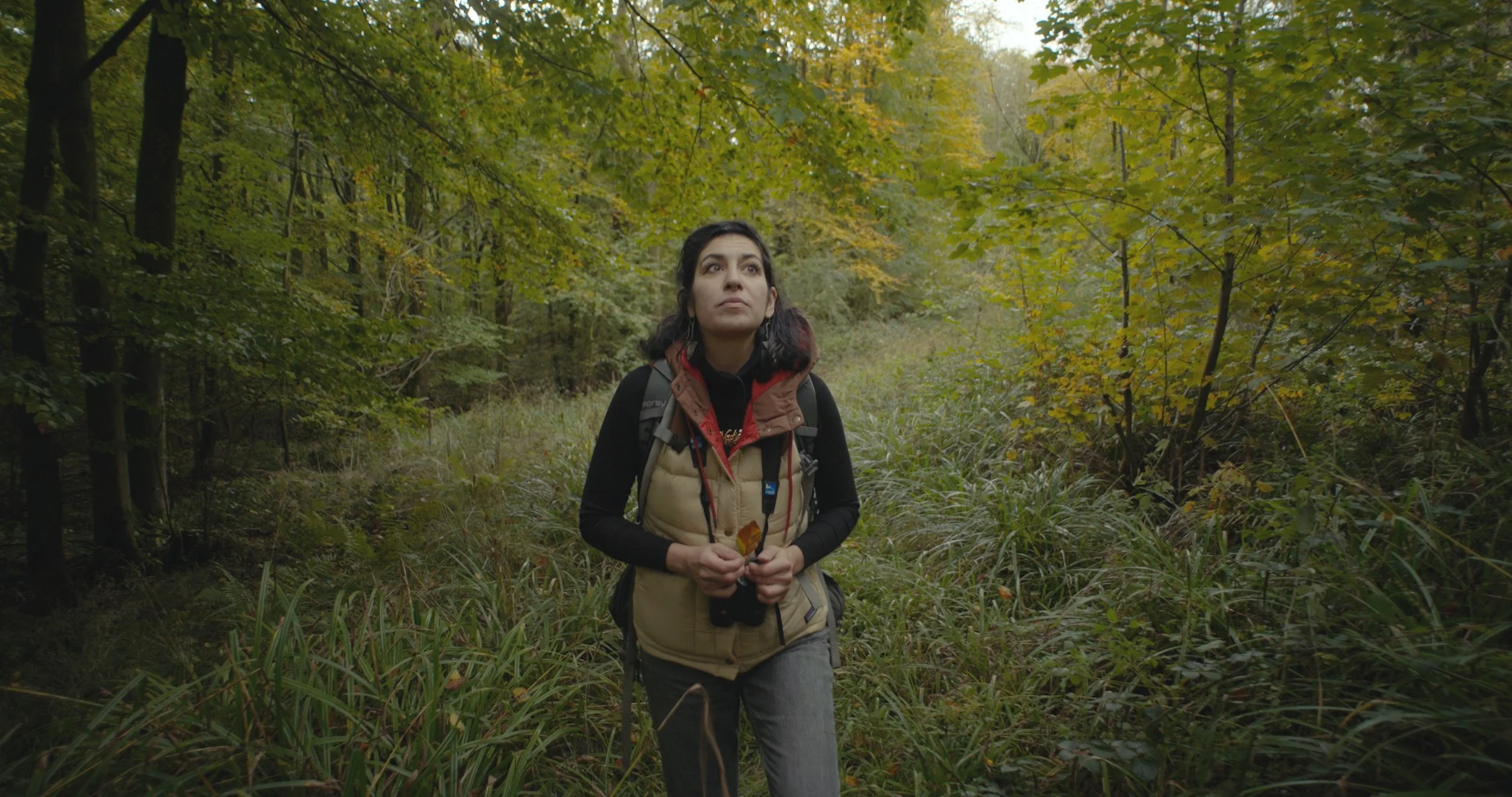
Nadia Shaikh, Naturalist, Conservationist & Right to Roam Campaigner
Shaikh directly addresses Fulford’s argument and gives a solution to the public’s apparent ignorance and riffraff-like behaviour: An increase in education on nature and wildlife. If you teach people how to respect the laws of the land, that problem goes away. Most of it is common sense anyway. Don’t litter, close gates behind you, and don’t disturb the animals. Giving the public more credit is clearly needed. It’s ironic that Fulford thinks we’re all going to destroy his land, given that he uses a huge portion of it for peasant breeding and shooting. This is the one exception that Fulford makes to allowing the public onto his land. If you want to come and shoot birds, it’s open season. Can you think of anything that would disturb wildlife more than killing birds with deafening guns and howling dogs?
According to Good Heart Animal Sanctuaries, “Shooting estates discharge over 7,000 tonnes of lead shot annually into the land and waterways. Wild birds often mistake these pellets for grit, leading to the poisoning of up to 400,000 wildfowl each winter, with several million more likely affected. Studies have also found dangerous levels of lead accumulating in plants, posing risks not only to wildlife but also to people.” You can’t make the argument that opening up your land would cause the people to destroy it if you’re already allowing destructive practices to take place. In one scene of the documentary, we directly witness a group of shooters littering the ground with bullets and dead birds. The irony stings.
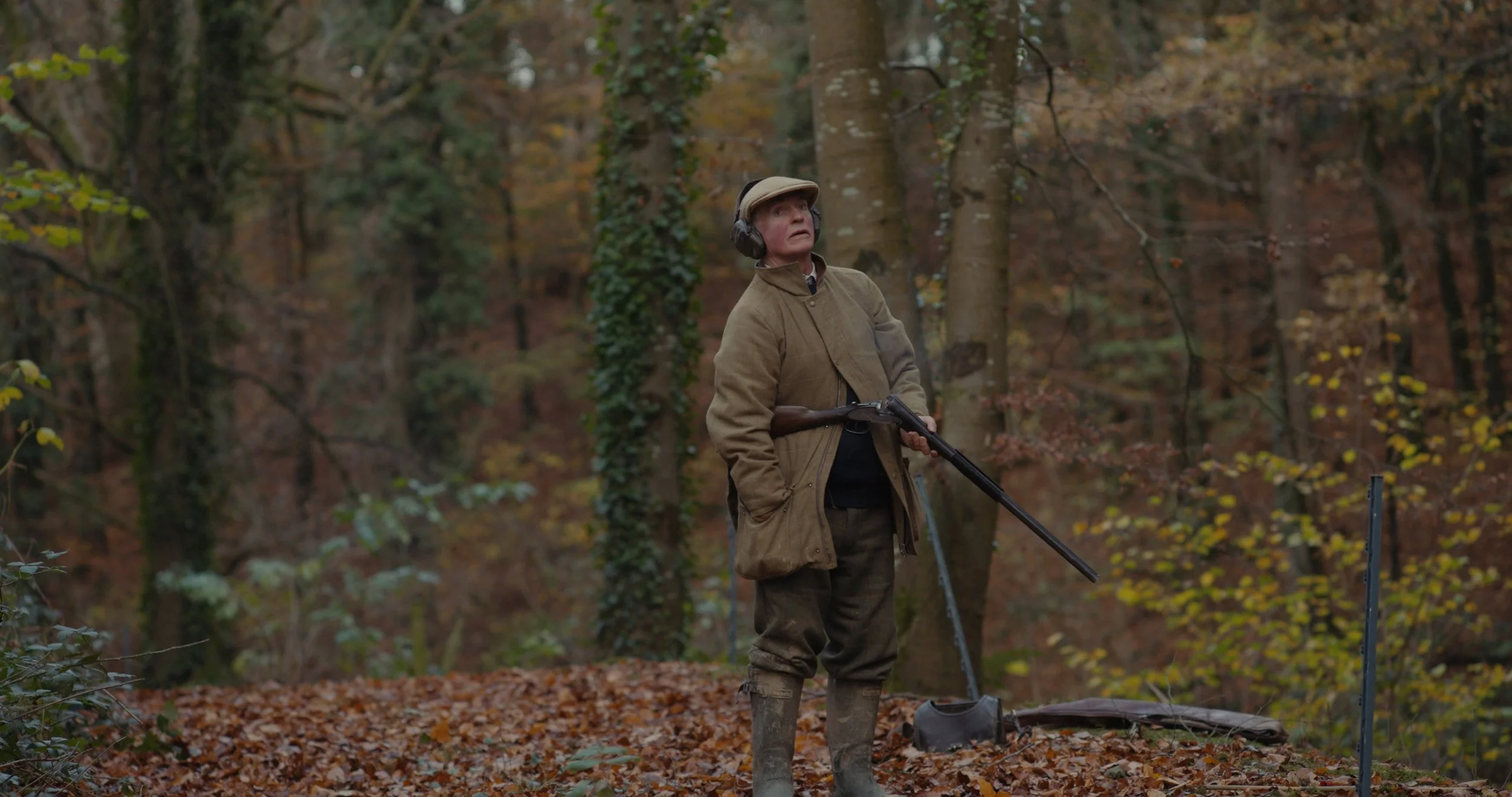
Francis Fulford peasant shooting
The part of the documentary that packed the biggest punch, however, was the reference to Scotland's Right to Roam. Up in our better halves' land, whilst all is privately owned, the Right to Roam Act is in full swing. You could walk across the whole country if you so please, with exceptions such as gardens, school grounds, and construction sites. Has this destroyed the land, or disturbed the wildlife, or even affected landowners? No, because the Right to Roam is only valid if people behave responsibly. This means leaving no trace, disturbing nothing, and taking responsibility for your own safety. There isn’t anyone who moderates the public’s behaviour per se, but instead they are trusted to be responsible adults and are reminded of this ideal code of conduct where possible. In showing a country where the Right to Roam is both legal and well-executed, this documentary perfectly presented its argument. How can you argue with evidence of it working and serving the people well? This seems like a solution that fits all. Landowners can continue to own their land, and the public can enjoy and appreciate the entire country.
As if this wasn’t enough, we then see a win for the Right to Roam campaign: a legal dispute over the right to Wild Camp on Dartmoor National Park. What initially ruled in favour of the landowner Alexander Darwall was eventually overturned by the Court of Appeal and the Supreme Court.
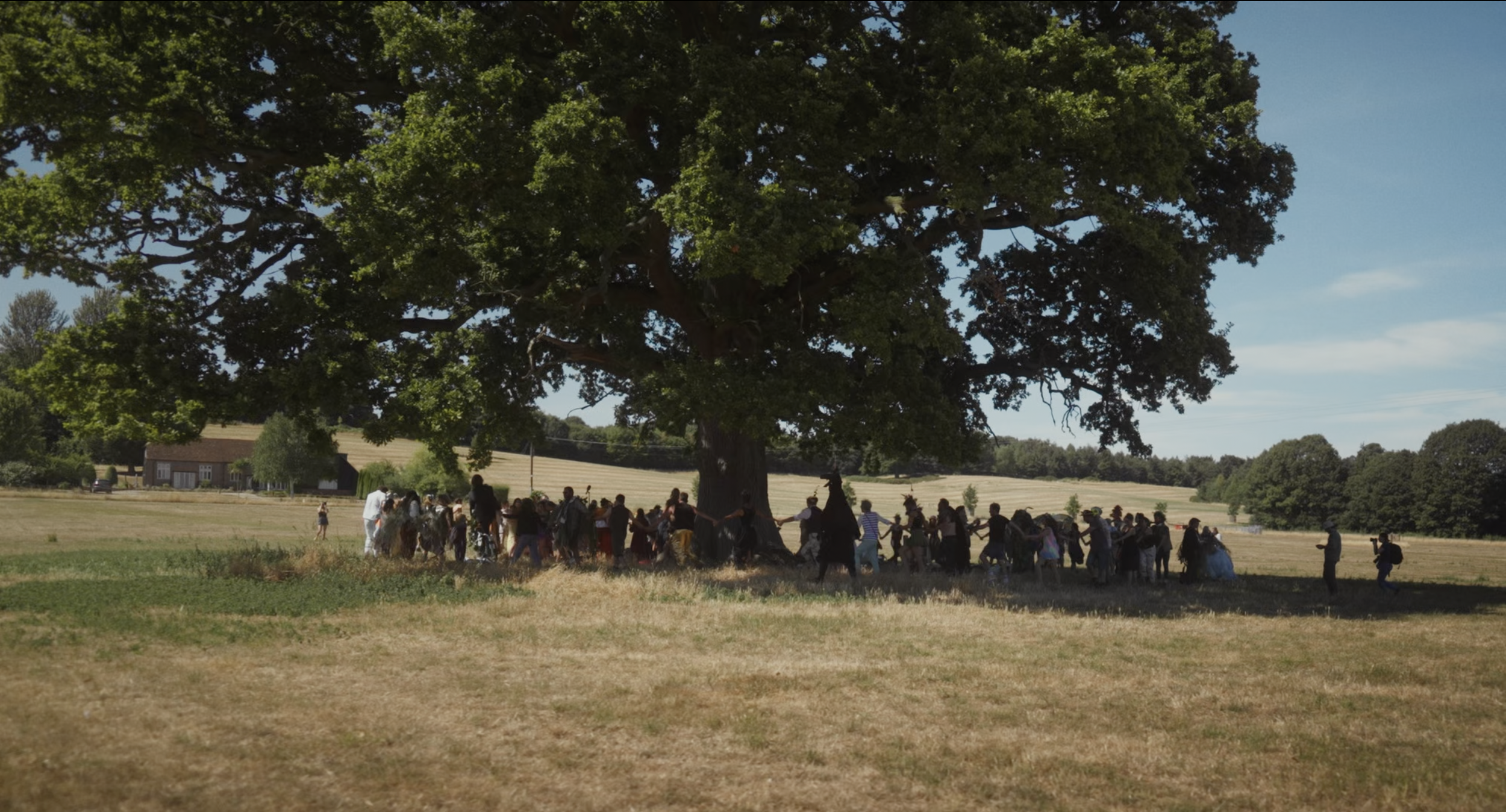
Benyon Tree
The documentary could have finished here, with full knowledge that their point had been well made, but it continued, bringing forth wider connected topics and conversation. One of these was the Kinder in Colour initiative, an event led by Shaikh and a variety of groups alongside the Right to Roam movement, which commemorated the 1932 mass trespass up Kinder Scout in which six trespassers were arrested, and five were imprisoned. Black and POC were encouraged to join this hike, which worked to highlight the barriers that have historically excluded them from the countryside: “It's been widely reported that, despite making up 13 per cent of the UK population, Black and POC make up only 1 per cent of visitors to national parks.” What one man (Francis Fulford) might say doesn’t make sense because ‘black people don’t want to be in the countryside, so why are we trying to make it happen?’ can easily be rebutted. Black people are represented less in the countryside because they’ve been excluded for years. There are so many factors that contribute to this exclusion: racial, financial, and historical. And all are interlinked with one another. This hammers home the point that the laws and rules that created and retained private ownership of land are still today connected to colonialism, class, and race.
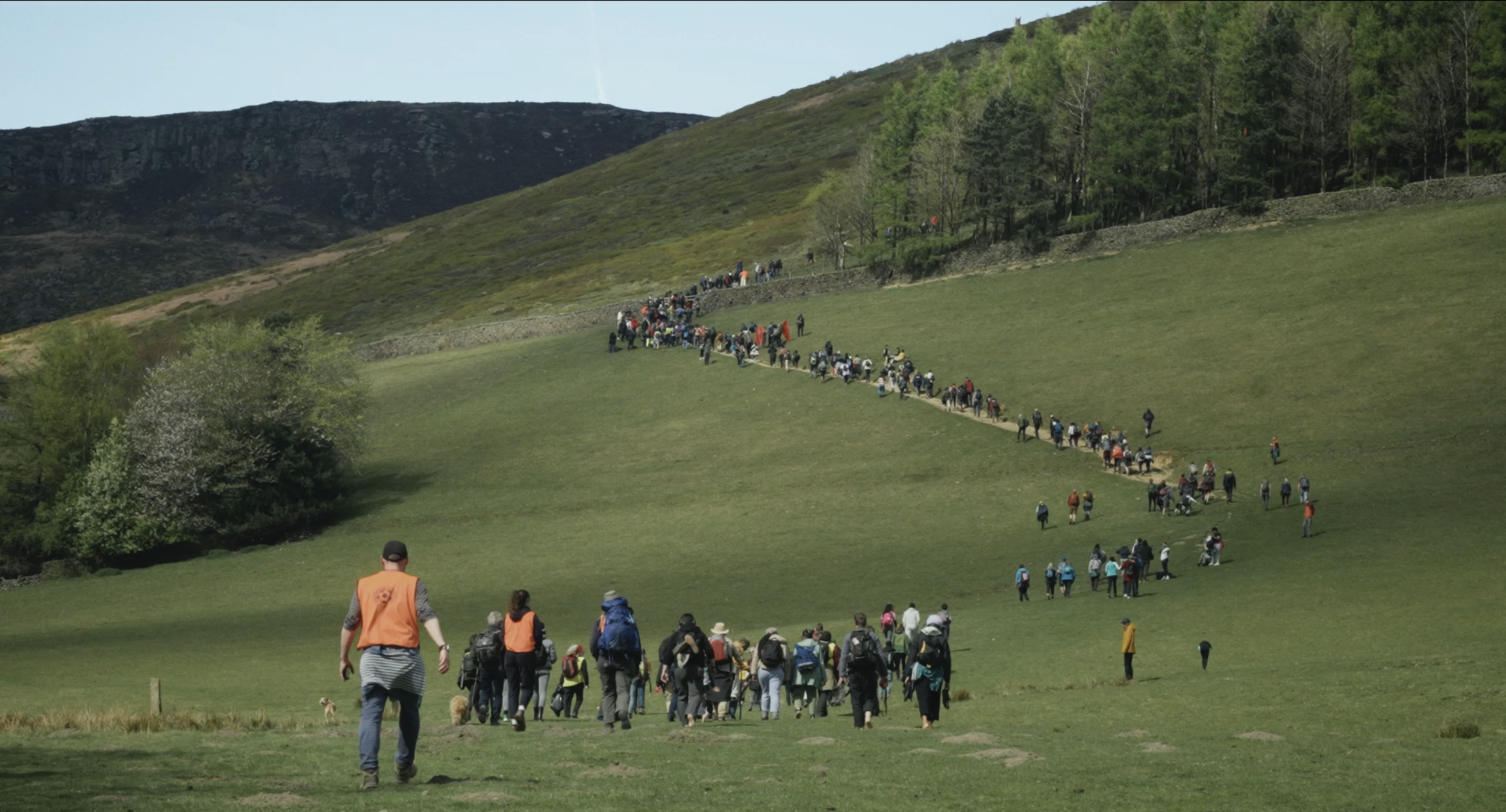
Edale, Kinder in Colour Event
If you want to hear about the impact of initiatives like Kinder in Colour, I recommend this article written by Anita Sethi.
This documentary took a debate which has been condensed into for and against, and blew it open to show the intricacies and varied experiences and opinions of the people it most affects; in this case, that includes everyone, all ages, all races, all classes. But the good news is, there is also a solution that can benefit all. So long as equity is given a front seat, we can solve this issue and bring people back into nature. Educating both landowners and the general public will go far in doing this! It is safe to say, Our Land came with the facts, and left with a win for the Right to Roam campaign.
And I, for one, can’t wait for the day that I get to walk into Francis Fulford’s fucking big garden with you all. See you there!
Written by Shan Victoria Randall
Shannon (sometimes Shannon Victoria, sometimes Shannon Randall – pick one) is a Writer and Creative.
She loves to write about what matters most to her: the climate, nature, inspirational people, and social causes. She’s on her way to writing her first novel and is an aspiring Editorial Assistant!
Our Land will play in selected cinemas throughout the summer.
As of the 8th of June, it is also available to stream on Amazon, Apple, Sky and YouTube.


Recipe