Talking To: Dal Chodha, Fashion in Film's Co-Curator About Cinema, Sustainability & Youth (Spring)
As the days get darker and the Autumn rolls in, film is often a comforting blanket that I reach for; especially for its ability to whisk you off to other places. It is for these transportive qualities, Dal Chodha explains to me, which makes cinema suited to conveying the chosen messages of Fashion in Film Festival 2025.
“The big important definition is that it is fashion IN film” Dal tells me as we sit outside the Watershed on a fresh Sunday afternoon. “It's not a fashion film festival which is the mistake that a lot of people often make and that distinction, that tiny word of two letters, is so crucial. Because what it should imply is that we're interested in Film and Cinema”.
Dal Chodha is the Pathway Leader of Fashion Communication: Image and Promotion course at UAL, a writer, editor and self-confessed cinephile. He is also the co-curator of this year’s festival. Now in its 8th year, Fashion in Film has a busy schedule, showing some 80 films over 16 venues. A tour of London is already completed and further dates in the southwest and Scotland are on the horizon.
Each year carries its own theme, with this year’s being ‘GROUNDED: Fashion’s Entanglements with Nature’. I asked Dal where the kernel of inspiration came from. “This one was obviously very pertinent, thinking about ecology, the planet and sustainability. These are issues that the fashion industry has grappled with, and I would say created”. However, the festival aims to skip any didactic lecturing and scientific preaching in a bid to take a more human approach. “When something is so important for all of us to grapple with and deal with, I think isolating it with these kinds of words that feel often quite judgemental and restrictive isn’t helpful.” Dal believes that more austere arguments run the risk of only appealing to those who are already clued in on the impact of the garment industry. “There's not enough film nerds, there's not enough fashion nerds to really make any change. You actually need the people in the middle and they're the challenging audience to capture for any purpose”.
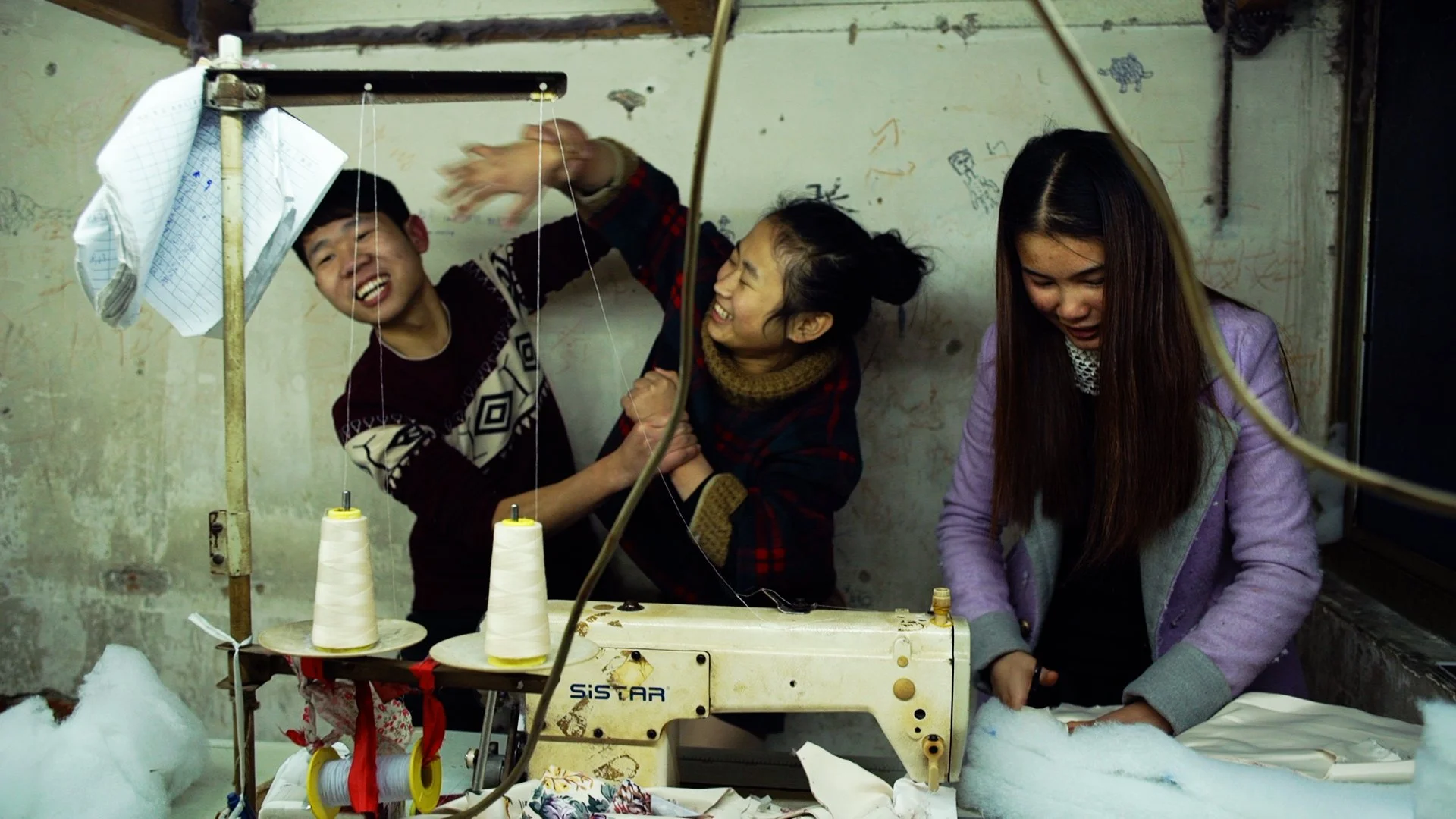
This more holistic approach to conveying the effect the fashion industry has on our world can be seen in the film I would be watching that afternoon, Wang Bings ‘Youth (Spring) - a personal favourite of Dal’s and one that he would be introducing himself. Filmed over the course of six years, this slow burn documentary focuses on the day-to-day lives of young Chinese migrant labourers working in the garment factories of Zhili. “I think the interesting thing is the title of it, you know, Youth Spring. So, it's setting it in a time of year that is not obvious in the film at all but also that idea of things budding and beginning and growing”. The reason why the time of year is so ambiguous is because of the documentary’s setting. Often cramped and hectic, their living and working conditions are often devoid of light, creating an oppressive sense of timelessness which is set to the constant and dizzying whir of industrial machinery in an urban environment. There is no real immediately obvious plot; choosing to follow a large group of workers instead of the development of an individual creates a feeling of futility. There is no sense of start, middle and end to the film. It is monotonous and this sense of perpetuity is matched by the film’s 3-hour 35-minute run time. Although this may all sound like negative criticism about the viewing experience, it absolutely is not. I have never watched a documentary that conveys a feeling so aptly. It just happens to be that the feeling that needs to be conveyed in this film is a sense of monotony and escapelessness.
However, amongst the grim reality of their working conditions, what makes the film important is that it humanises the garment workers who often remain mere characters in the rhetoric surrounding fast fashion. “Yeah, I think we ‘other’ a lot of things and we ‘other’ a lot of people. So, when we look at garment workers in far far-flung countries to us, we love to kind of think “Oh my God, it must be so awful.”” It is for this anti-othering that this film was chosen, it humanises the workers. Amongst the bleak working conditions, you still witness young people being young people. Dal tells me how you often see these subjects shoehorned into news cycles, offering little other than the bare facts. Whereas cinema can play a different role, cinema has the ability to make these difficult subjects more approachable to people and present a broader understanding of people’s lives. “Yes, their life is not your life or my life at their age, but they're still young people that are hung up about themselves, that fall in love, that argue with each other, that, you know, get hungry and play on their phones.”
Walking home from the cinema, I thought about what I had just watched and discussed with Dal. The film had had an impact on me, and everything mentioned by Dal was true regarding my own understanding of fast fashion and garment workers. I knew all the buzzwords, and I knew fast fashion was bad. However, I didn’t know what the lives of the people involved looked or sounded like and I hadn’t put much thought into it beyond that. Through this film I have gained a human understanding of the industry and the people that are involved in it in a way the news never could. This film is just one of 80 being shown across the festival and I implore you to try and watch at least one.
Written by Angus Cawood







Recipe