“This bread is a spaceship”: Tai Shani at Bristol Museum
“We lived a thousand real lives,”
says Molly Moody, the hypnotic narrator of Tai Shani’s video installation, Neon Hieroglyph, held at Bristol Museum until June 28th.
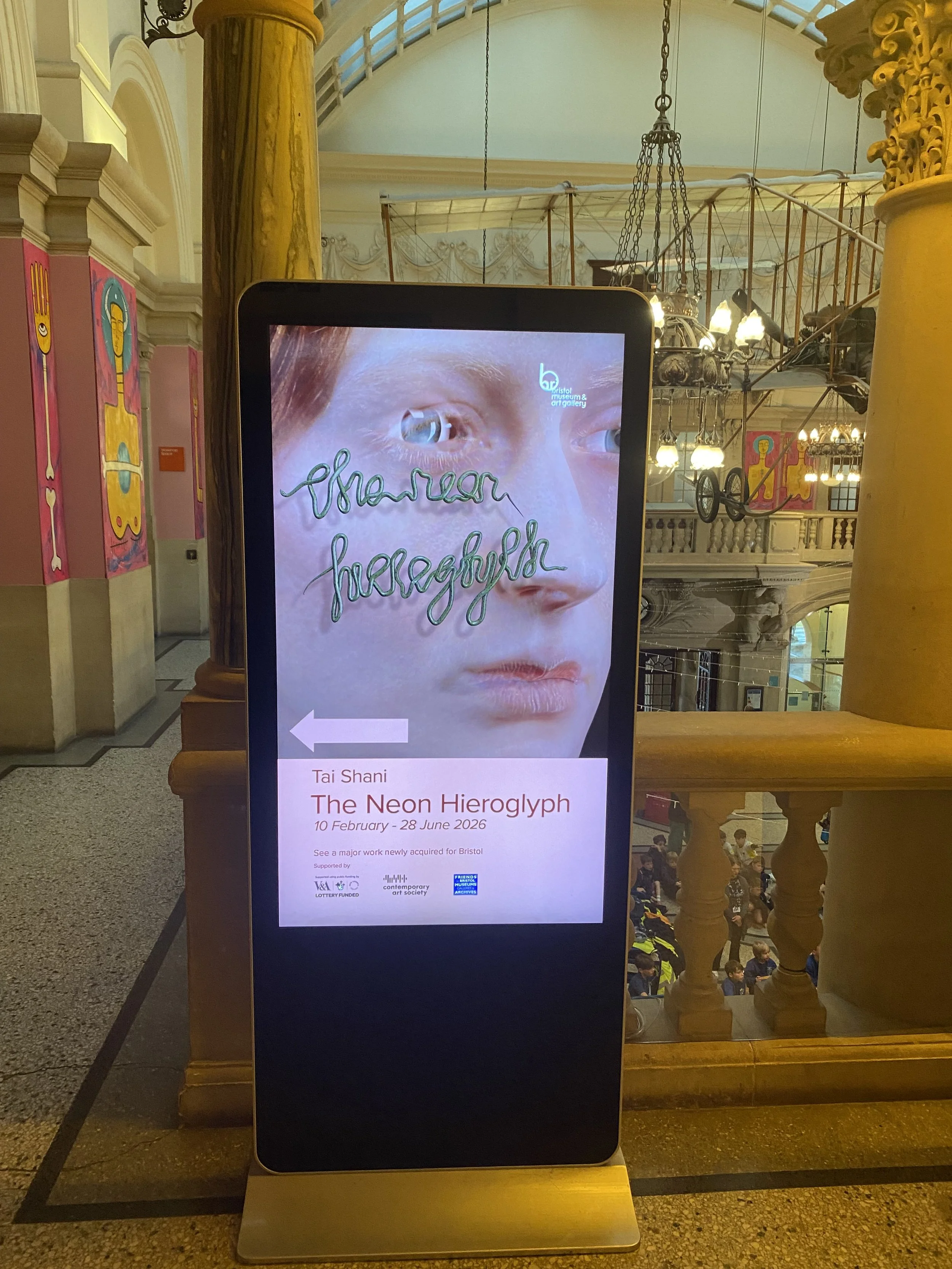
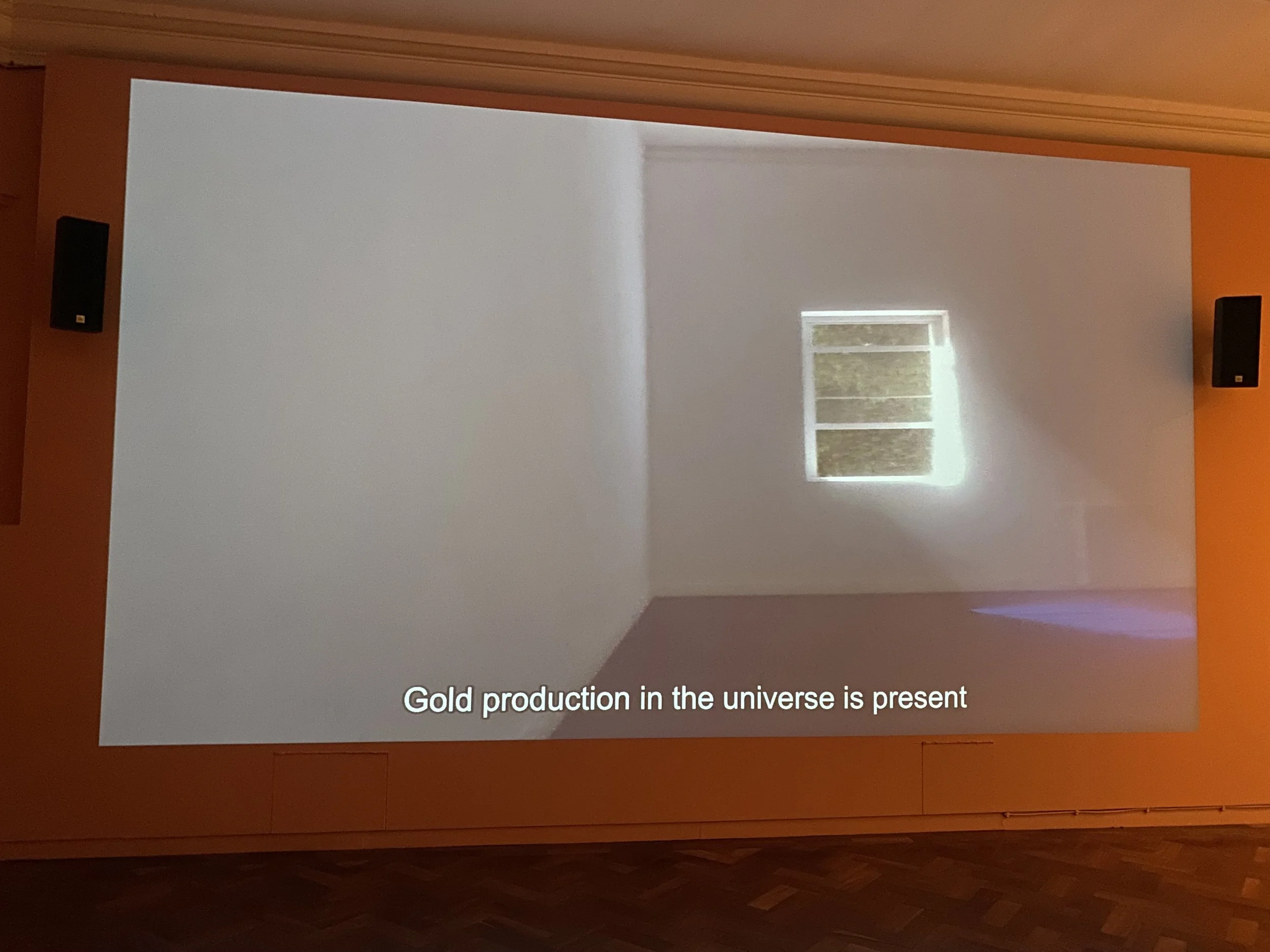
We are on the island of Alicudi, yet also in the skies above the Aeolian sea, drifting through a galaxy, looking up at the burning sun from the blue, navigating a CGI room with light blasting through the window and inhabiting a drone, drifting over a forest.
We fly as witches, glimpse grain in extreme close-up and float atop the writhing sea.
Mainly in CGI renditions in an astral trance, in Shani’s filmic lens, we are everywhere.
Living on a large rock amongst a volcanic archipelago north of Sicily and south west of Napoli, the Alicudians have witnessed their fair share of fantastical events: the explosions of Etna and Vesuvius on the horizon and witches flying through the sky, but we’ll come back to that.
First, ergot. Cogito ergot sum.
Neon Hieroglyph is the culmination of years of research and practice by Shani around ergot, who describes the film as a “feminised history of ergot”.
Claviceps purpurea is a parasitic fungus that grows on cereal grains in certain conditions – it loves rye, especially. The word ergot derives from the French word argot, meaning a ‘cocks spur’. It manifests as a dark, thin worm-like growth upon grains. It looks a bit like a bumpy banana-shaped vanilla pod. It thrives after damp conditions in the springtime, blighting grain yields since the beginning of agriculture.
Like its physical manifestation, ergot pops up in history as little potent growths. It has a habit of manoeuvring onto growing and swaying historical events in directions that we’ll never really ‘know’.
Why? Because ergot alkaloids are also a precursor to LSD.
Mass hallucinations via ergot poisoning might have swayed the events of the Salem Witch Trials, the French Revolution, the Ottoman and Russian Wars, or so the historians say. Ergot trips are said to be particularly bad ones.
The ergot scourges of the late Middle Ages are thought to have inspired the horrifying proto-surrealist imagery of paintings by Bosch and the Isenheim Altarpiece by Grünewald.
But it is not in these pop highlights of history that the Neon Hieroglyph wants us to journey to. Shani’s interest is in the mythical, the psychedelic, the speculative.
In Alicudi, the islanders relied upon rye as their main source of grain for hundreds of years.
Here, we are faced with the prospect of a tiny society that has been tripping for centuries (the reality is that it was probably only from time to time, when particularly damp conditions in spring rendered conditions perfect for ergotic spores to thrive).
“We lived a thousand real lives”
Shani’s writing carries things: she calls it an ‘overflow’ or ‘excess’. The film is split up into nine hypnotic monologues, or chapters, narrated by actor Molly Moody (each chapter’s end is marked by the same musical cue by Manchester-based composer Maxwell Sterling).
Often, ‘excess’ in Shani’s writing is the plethora of materials, whether biomes or organic matter (sea, space, grain, fungi).
But this excess is also a breaking apart from the natural ‘order’ or hierarchy of things, of physical or scientific containments. At one point, Moody’s narration talks about the ‘contested borders of things’.
“Cherry stone… Apple seed. Baby Osiris in the underworld asks about the most technocratic desires … Squirting out magma... Consumed spoiled grains… Spelt in a murmuration.”
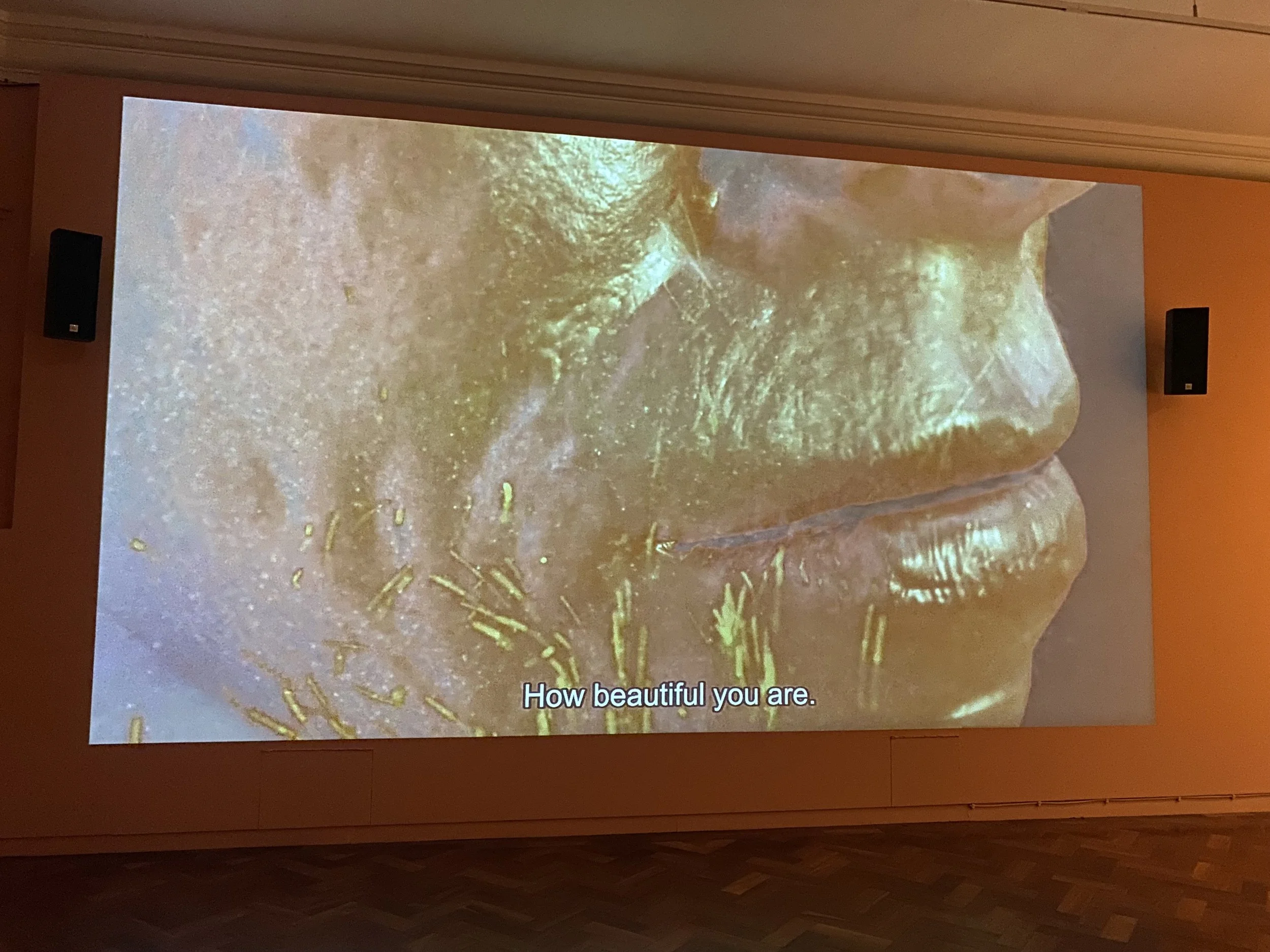
From seed to gold to Saturn to coal, we trip from the organic to astral to sexual to metaphysical as part of the same process of imagination in Neon Hieroglyph.
Whether they are ‘real’ or the creation of ergot-induced mass hallucinations, Moody’s musings are the ruminations of the maiara, the mythical witches of Alicudi. It is the maiara who were spotted flying across the Calabrian skies to Palermo and Naples and turning men into donkeys.
The film opened at Factory International in Manchester in 2021, in the COVID era of virtual exhibits (Manchester was the site of the first major recorded ergot poisonings in Britain, amongst Jewish refugees in 1927).
Shani talked with Factory in an interview about how the village-women-turn-collectively-hallucinated-witches are a different sort of witch story:
“(The Maiara) were positive and benevolent, and kind of socially crucial, which is the opposite of most European witch narratives. They would paint their bodies in some kind of ointment and then fly to the mainland and steal from the rich.”
I first saw Shani’s work at the astonishing autumn 2019 Turner Prize exhibition at the Turner Gallery in Margate. The artists Shani, Lawrence Abu Hamdan, Helen Cammock and Oscar Murillo decided to share the award due to the political affinities of their work.
Despite their differing engagements with political ideologies across feminism, neo-colonialism, and socialism, the artists felt their intersectional practices arrived unintentionally under one banner. The artists said they believed the award should be shared “in the name of commonality, multiplicity and solidarity”. If you remember this far back, this was in the period of Boris Johnson’s leadership and the swing to the right.
The Turner 2019 exhibition featured rooms full of stuffed human-sized dolls in church pews; sound art and videos documenting war crimes in the Middle East via charting their spatiality and remapping the sounds created in them; Shani’s sculptures forming spectacular architectural and organic forms; video art of Derry and accompanying texts about social struggle in Northern Ireland during the Troubles.
The central structure of Shani’s show for the Turner Prize, DC: Semeramis, looked like a diorama of a fictional city or temple. This central structure and accompanying sculptures were presented as a “series of interlinked stories and mythologies”. Shani called it a reality that is “neither completely divorced from our own, nor tied to our own history, or our future”.
Similarly, Neon Hieroglyph feels like a rhapsodic mode of mythological dismantlement, a construction of possible futures. A trip to discover how filmmaking and artwork can imagine utopian pockets, dystopian consequences, in certain historic contexts, in certain neuro-chemical states…
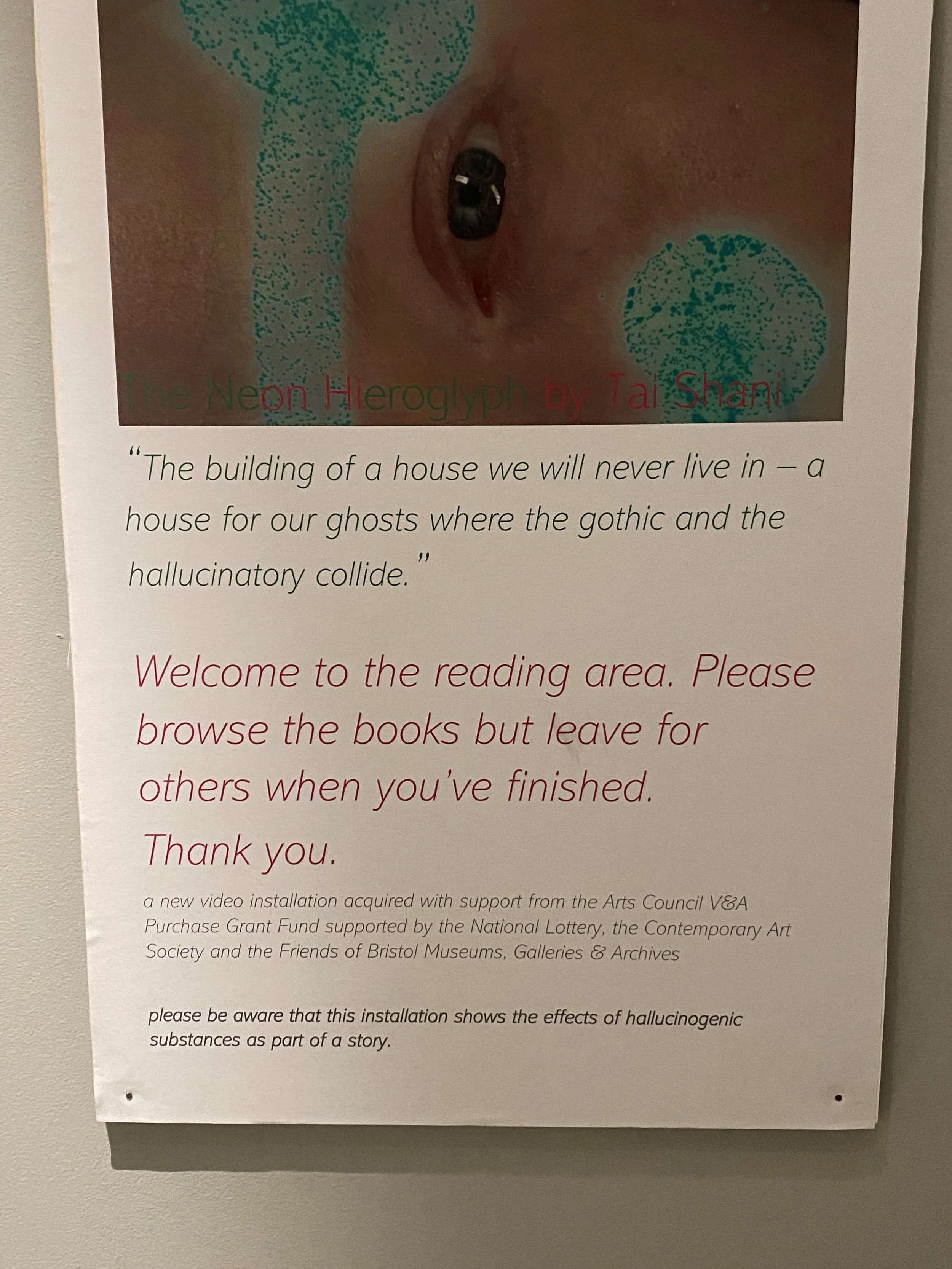
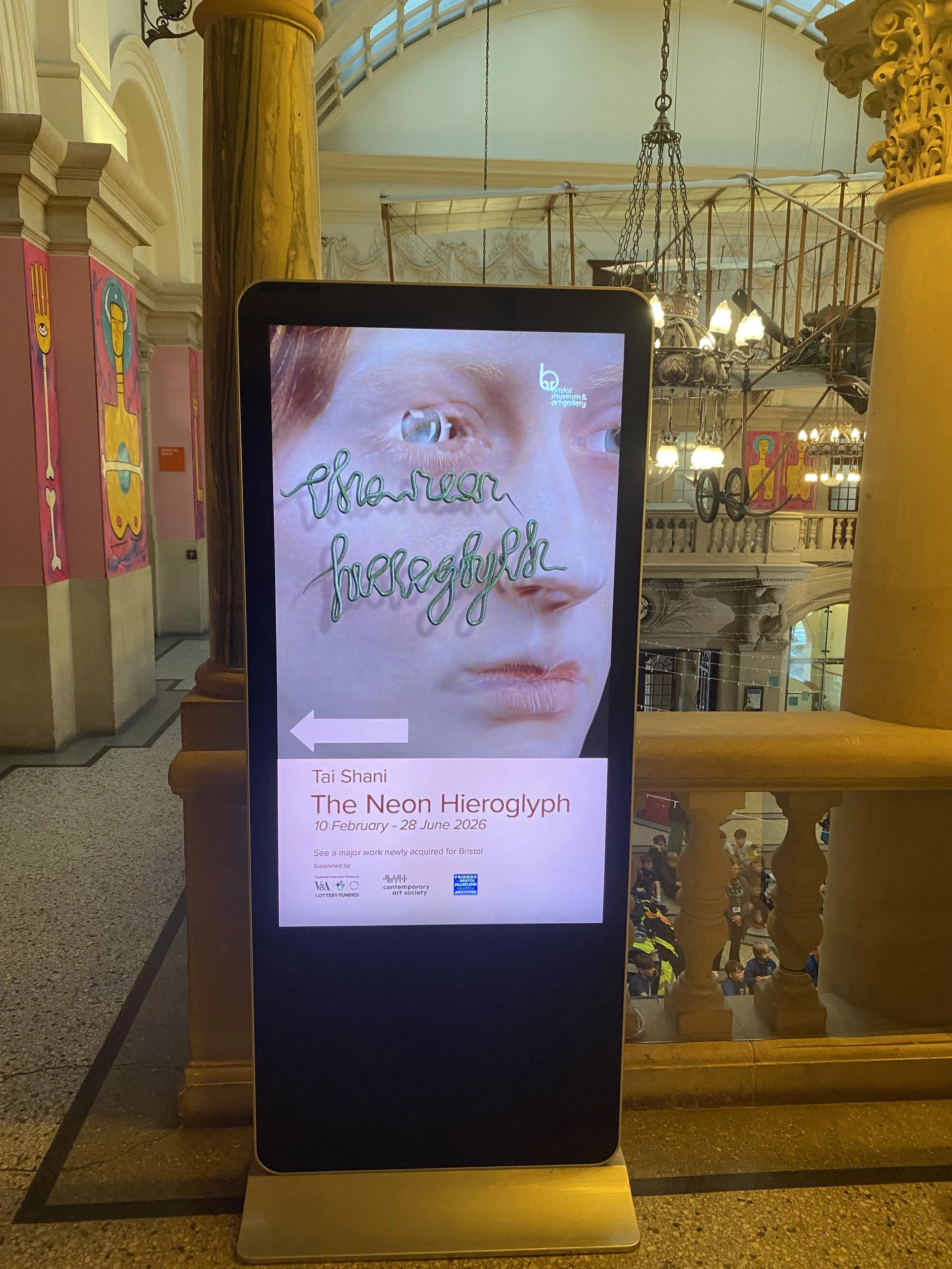
The film is tucked away in the corner of the Bristol Museum near the hanging 1910 Bristol Boxkite biplane (an inexplicably appropriate talismanic neighbour to the exhibit).
Adjacent to the screening is a reading room of books that have inspired Shani’s practice. The works include Ursula K Le Guin’s The World for World Is Forest, Lewis Carroll’s Alice’s Adventures in Wonderland, Michael Pollan’s This Is Your Mind on Plants, and Audre Lorde’s The Master’s Tools Will Never Dismantle The Master’s House. Each of the 11 books is neatly placed on singular shelves, with a chair placed in the corner for prospective readers to sit as Moody’s narration loops hypnotically next door.
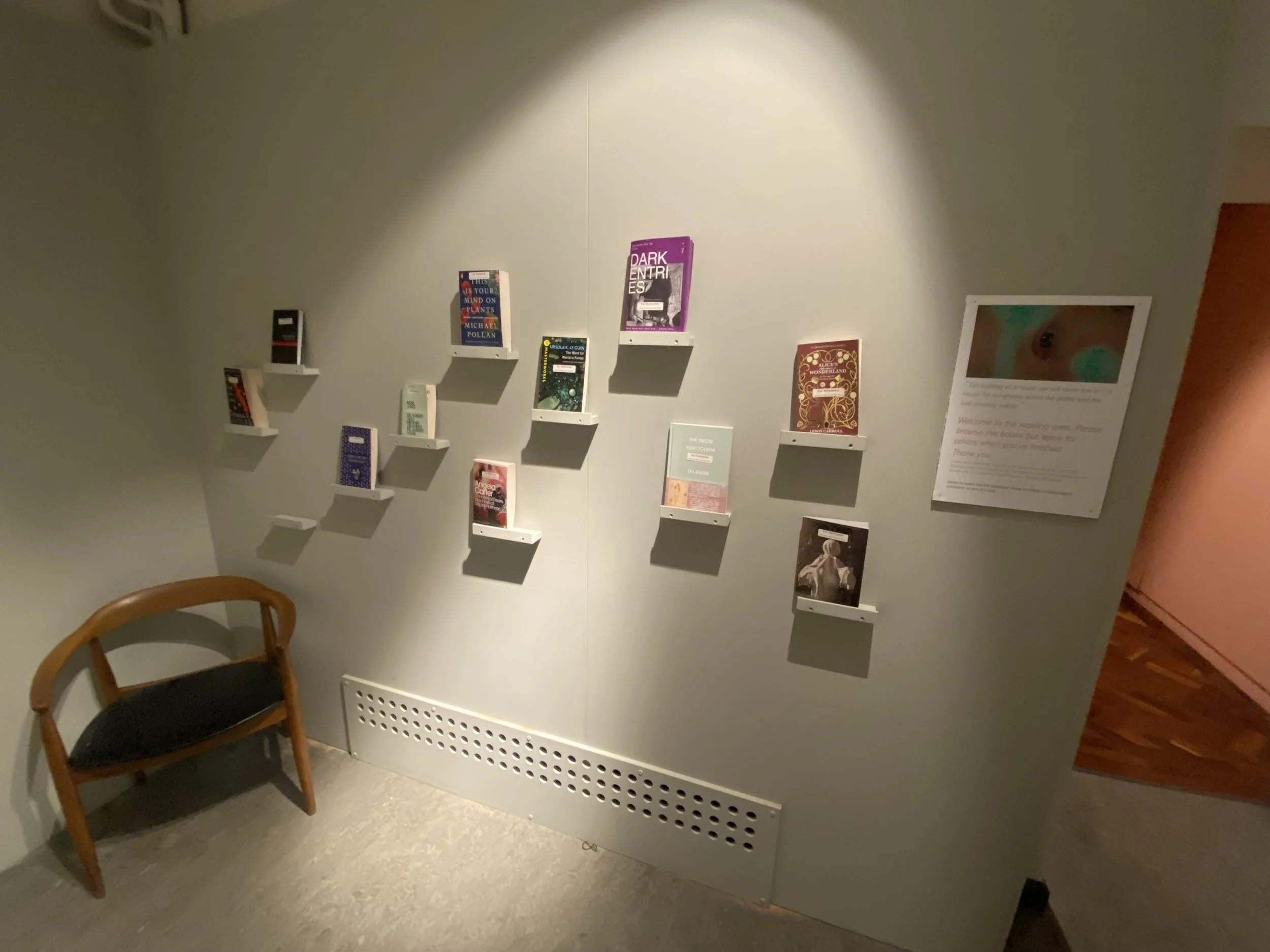
In her 1986 essay The Carrier Bag Theory of Fiction, Le Guin subverts the idea that the definitive objects of human history have been sticks or spears or swords, but containers like nets or slings. Le Guin argued that anthropological development in caves or fields tens of thousands of years ago (other feminist anthropologists had argued the same in the 1960s and 1970s) could be defined just as much by how early humans carried and gathered vegetables, or meat, or grains, as by the ‘decisive’ or linear objects that history tells us to value.
This anthropological metaphor, Le Guin explains, can tell us about storytelling. What if history and therefore our society and therefore our future is not defined by the combative weapon or decisive swing of an axe, but the shared weight of collected ideas and stories?
“It sometimes seems that that story is approaching its end. Lest there be no more telling of stories at all, some of us out here in the wild oats, amid the alien corn, think we'd better start telling another one, which maybe people can go on with when the old one's finished.”
If, as Le Guin suggested, the old stories of patriarchal conquest and inevitability are reaching their limits, then Neon Hieroglyph proposes another way of imagining. Not a blueprint for utopia, nor a warning of dystopia, but a vessel for embracing multitudes. A carrier bag filled with organic matter and cosmic dust, myths, scattered seeds, witches, living statues of rediscovered pasts, things to be carried forward, even when we do not yet know where they are taking us.
“This bread is a spaceship”, Moody tells us at one point in Neon Hieroglyph, “we will end up in a museum with unrecoverable vibrations”.
Neon Hieroglyph is on until Sunday, 28th June.
Written by George Leith

Recipes