Talking to: Fish56Octagon
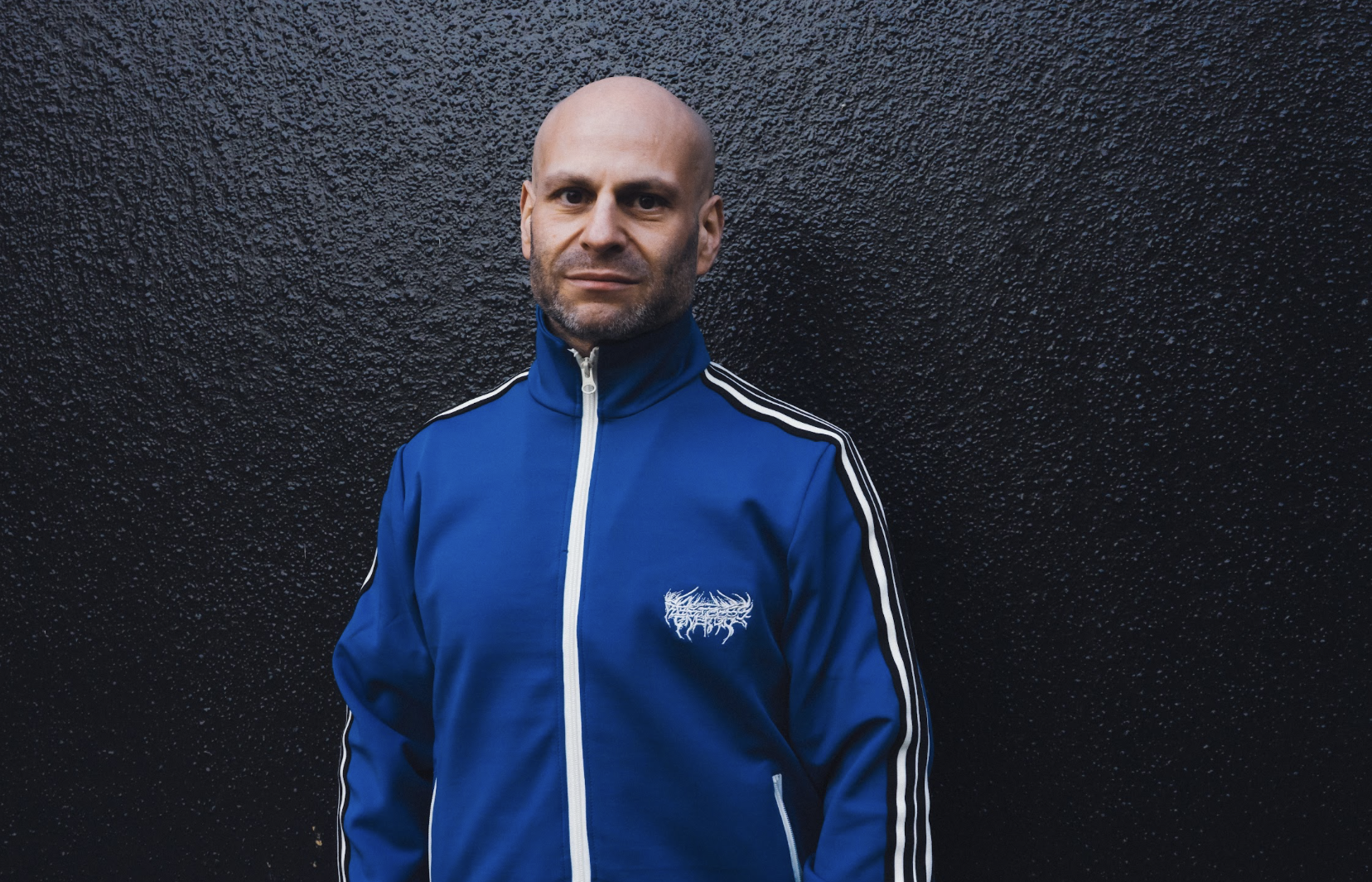
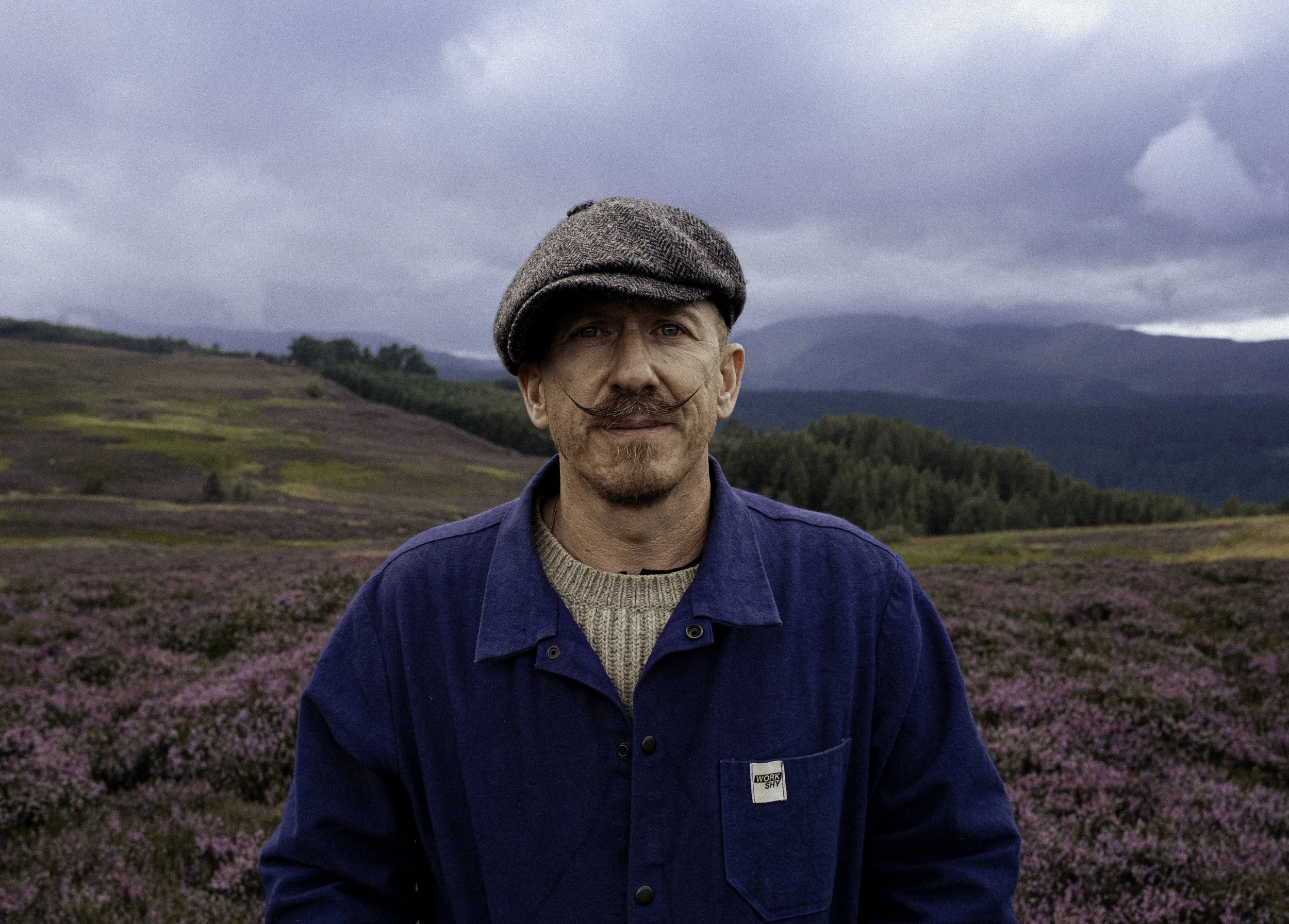
Ahead of his upcoming gig at Electric Bristol, we sat down to have a chat with Fish56Octagon. The DJ content creator - deep lover of dance music - dressing gowned dad whose beginnings were in a completely different world of content after giving up on the music industry earlier in life. Throughout the conversation, we meander between personal life stages and the many facets that make up the daily life of balancing DJing, content creation and production…
So you've have a marketing background, formerly being in the marketing world for work. You then went straight into content and made this pivot from doing car content to rave culture content. What was the moment that you made that pivot?
Fish56Octagon: I was making car content during the lockdown and music's always been my big passion, but I'm also a petrolhead, I'm really into my cars. at the time I didn't think young people would be so interested in hearing someone of my age talking about music. So I went down the car route and I started my little car channel. I made a lot of videos helping young people buy cars, how to choose your first car, lots of advice on car buying and insurance.
I always used to have some music in the background of my videos to make them a bit less boring, people would often ask me about the music. I kind of ticked along doing that for a few years to the point that I actually built it up to a reasonable size, but it was only on TikTok.
People kept asking me about the music and why I was playing this song in the background and it was always dance music. Every now and again I'd post from a music festival and the views on those were much bigger (compared). After a while I just thought maybe there is a bit of an interest in the music thing after all. I love music, I love talking about music.
I'd also just started rebuying some of my old records which I'd sold off. That gave me a natural content pipeline because I'd just be opening these records, showing what I'd bought that week and playing them on my channel.
In the end I just switched it over. I started getting some demand from people to DJ at events, but I resisted that. I didn't really want to do it. I was a DJ when I was younger, but I'd kind of moved on to a different life phase. I was a bit older and I wasn't really that confident with it.
But in the end I decided to just go for it.
Does the music side feel more a part of you than the car side, or is there two sides to you?
Fish56Octagon: I'm way more into music than cars. Way more into music. And I always have been.
I was deciding what to make the focus of my content, and I just thought, I'm never going to build a music audience. These guys are 18, 19 years old, they're not going to be interested in hearing someone my age talking about music.
That turned out to be wrong, to be honest, but there you go.
You said your car stuff was aimed at younger people and advice for younger people. Was it always intentional to provide this advice, this pathway, this wealth of knowledge to young people?
Fish56Octagon: It just kind of fell into place because I've always liked doing stuff that's helping people and sharing information.
There was always this slightly analytical side to it. Rather than getting really into the detail and talking about this car and that car, it was more analytical problem-solving.
People saying, "I need an automatic car and I've got this budget and I'm this age,"
Someone would say, "What's the best BMW for £5K?" and I'd look into it.
I was actually learning quite a bit myself. I'd always known a bit, but more on the performance car and supercar side of things.
During lockdown there was a gap in my life when I wanted to find an activity that was fulfilling and interesting, I was using my brain to gather information and analyse stuff. It was just a good fit for where I was at the time.
It became very addictive helping people because what I realised was that something that was easy or obvious for me was actually quite daunting if you knew nothing about cars. You can do Google searches and read magazines, but being able to ask a direct question based on your exact criteria made it more engaging.
I started looking at adjacencies as well. Looking at Max Power, hero cars, car audio, modified cars, supercars, the cheapest cars, the most expensive cars.
There are a lot of people out there who know far more about cars than I do, but I think part of the charm was that it was a bit all over the place. It wasn't very focused and it wasn't some time-honoured, dry delivery. It was just a bit of a fun mess.
It caught on. My following grew quite fast on TikTok and I put a lot of personal stuff on there as well, like messing around on nights out. It became quite fun.
I was just doing something fun, something positive, helping people a bit, but also providing a bit of entertainment. It's harmless and it just bumbled along for quite a period of time.
You mentioned that you DJed when you were younger and put that to rest while you explored other interests. Now you're playing huge stages around the world. What's your relationship been like with DJing? Where would you say you are right now?
Fish56Octagon: So I got my first decks when I was pretty young. Probably around 1993 or 1994, I was maybe 13 or 14 years old.
It's always been a big part of my life, something I really wanted to do when I was younger, but I didn't put that much effort into it. I was resident at my student union for a year and a half, maybe two years, when I was at UEA, I played a few house parties. That was kind of the extent of it.
I used to make a lot of mixtapes. I actually found a big box of them the other day, all the tapes and recordings I made.
I carried on with that from the early 90s all the way through to about 2005.
Avidly collecting records.
I used to go to a college in Central London that had a second-hand record shop just up the road.
Every day after school my mum would give me a fiver for lunch. I'd spend about a pound on a packet of Walkers Salt & Vinegar crisps and I'd have four pounds left. I'd go into this record shop and there was a basement where every record was a pound.
There were loads of DJs bringing in old promos they didn't want anymore. Sometimes they'd get runs of things that hadn't sold. Actually there was one I played on my channel the other day that turned out to be worth £150. When I bought it there were probably twenty copies of it sitting in the pound bin.
I was pretty obsessed with it when I was younger. I was going out a lot, clubbing almost exclusively in London.
When I went to university I stuck with it. I went to the first Creamfields, Gatecrasher Summer Sound System and things like that.
Then when I started my career, I stopped doing it so much. It wasn't compatible with trying to build a serious marketing career. I was still going out, but not to the same extent.
The record buying gradually got replaced by being poor. I ended up buying MP3s and mainly using them to make mixes to listen to myself. I'd pretty much given up on the idea of DJing then.
I used software called Acid at the time and later Ableton. Every month I'd buy twenty or thirty tracks on Beatport, make a few mixes and have some fresh music to listen to. I was listening to all the Global Underground and Balance albums. Progressive, breaks, techno, house.
I got really into Ibiza and Glastonbury and my identity changed into more of a consumer - someone who went to Ibiza, went to festivals and partied.
Then lockdown and social media reignited it all. I ended up rebuying decks, got a mixer, upgraded it to a better mixer, started DJing again.
I got really into music production about two years ago and I've been super focused on that. I've had some degree of success with it, but I've got a long way to go as well.
If you can, where would you rank each of these right now? You've got DJing, production and content creation. What's most important to you?
Fish56Octagon: Production is the most important and it's the one I'm still growing in.
I'm at the level now where I can produce whole tracks and play them out. I can mix and master demos myself. My new single is out today. I produced and engineered that myself and just had a professional mixdown and master.
Production is the biggest focus.
DJing is brilliant and I love it. I think I've only got one weekend free between September and Christmas because I'm busy DJing, but I'm not playing three or four gigs every week like I was at the start.
I've got some really good festival bookings for next year.
The DJing requires time because I play a few different genres, so I have to listen to a lot of music. I get sent loads of music and I try to avoid playing whatever's in the Beatport Top 10 because that's too easy.
At the same time I don't want to just play loads of classic dance music from 10, 20 or 30 years ago and become a Spotify playlist.
I think it's important to pick and choose. I play a lot of my own productions, a lot of my own edits, and I spend a lot of time digging through promo pools, SoundCloud inboxes and social media looking for new producers.
If I see someone making great edits or productions, I'll DM them. Usually they're happy to send their music over.
The social media side takes a good couple of hours every morning and then I check it through the day. It's time-consuming but it's more of a means to an end.
At the stage I'm at now, I'm doing social media to sustain my DJing and production career because those are the things that are actually paying me. I quit my job about two years ago.
Music production, social media and DJing all work together in harmony.
Absolutely. I really like that you touched on how much you interact with people online. I've seen previous interviews where you've said you get thousands and thousands of DMs that you have to go through. You spoke about people sharing music with you, sharing their releases. So has there been one tune that you've championed that led to a really nice message you've received that's stuck with you?
Fish56Octagon: I'm very fortunate because I get that quite often. I have people saying they're thankful I've played their music on my platform. I've got a decent platform and, globally, quite a lot of people looking at it.
I've never wanted anything back. I think it's a privilege that people are sending me their unreleased music and I like being able to share it.
I've had a few people message saying their tracks have been signed after I've played them on my channel, which is great. There have been people I've championed a few years ago who are now getting on with their careers and are in a really good place.
But I've played a very tiny part in that journey because it really is those people, the work they've put in, the continual effort and talent they bring to the table that has enabled them to build a career.
I've been a tiny grain of sand in that journey. I've encouraged them, played their music from other people, and supported them. It's a very nice feeling thinking I've done that.
There's a guy who I champion a lot, Declan Knapp, a really talented garage producer. He sent me an edit of Superstar by Groove Armada a few years ago. I played it at Glastonbury and it absolutely went off.
So I made it the first record I signed on my record label. It's nice being a tiny little part of someone's story in that way.
Let's talk about Glastonbury then. Is there one moment from that whole experience or that genuinely overwhelmed you or gave you a bit of a goosebumps moment?
Fish56Octagon: I mean, it's mind-blowing. Glastonbury is the big one, right?
I've been to that festival many, many times as a punter and I love it. I've always gone and totally immersed myself in the whole experience and got the absolute max out of it. I've been so many times, so to be invited there to play is just like nothing else.
I don't have one memory because I've played so many sets there that have been life-altering in terms of my perception of myself as a person and the fact I've managed to do stuff like that.
It's just mind-blowing.
I've always tried my best to make those sets as varied and interesting as possible and to play all sorts of music from all sorts of different producers, big and small, with loads of flips and edits, and take the audience on a bit of a journey.
I played on the Glade Dome stage on the Thursday in 2024, which was really busy. I played a really varied set with lots of different styles. It was mainly house music, but lots of different sub-genres within that.
Then I came back a year later and played on the main Glade stage, which was mind-blowing because it was a really big stage. I did the same thing, but it was a lot more of my productions. I played a Kneecap edit when Kneecap were really popping at the time and it worked really well. I also did a dancing remake of a Fontaine's D.C. track that went down really well.
Things like that make it such an experience.
I also played a trance set on the Greenpeace stage. No one gets to hear much trance at Glastonbury because it clashes with Luminosity, which is a Dutch trance festival. A lot of trance fans and DJs are usually there, so you don't get much trance at Glastonbury.
I got offered a set on the Greenpeace stage and thought I wanted to do something a bit different. I was clashing with Charli XCX as well. I thought I couldn't just do a house set. It had to be something different that gave people a reason to come.
So I announced it and said, "I'm just going to do a trance set, guys, because you don't get to hear much of it at Glastonbury."
I got a really busy stage and a really good slot, around 8 or 9pm on a Saturday night. It was just really busy and I played all this amazing old trance music, a few remakes, and put quite a focus on classic trance and a little bit of hard house.
It was a really good vibe for the whole set.
There was another special moment for me. I played a back-to-back set with Bou. It was a surprise drum and bass set in Shangri-La. I got asked to play Gorilla Bar, one of those secret VIP places down the side of Shangri-La.
I popped up there and shelled out loads of really filthy garage and bassline.
I've got so many amazing memories of that festival and I hope that continues. It's a very special place and it means a lot to me.
Amazing. More to Fish56 and Glastonbury.
Fish56Octagon: The whole South West is blessed with a very real music scene. You've obviously got Bristol and Boomtown and there's Glastonbury. It's a hub for creativity, open-mindedness and fantastic music. So many incredible acts come from that part of the country.
Wanted to talk more on trance, actually. Your kids end up hearing psytrance being played at breakfast time. What's the funniest thing they've said to you about your job?
Fish56Octagon: My kids, especially my daughter Sasha, who's a bit older, found it really quite embarrassing to start with.
I was playing music in my dressing gown and doing not very good dancing.
But after it became a career, she took it a bit more seriously because in the end, when we were out and about, we'd continually have people coming over wanting selfies and stuff.
I'm really happy to do it, but I think at that point my kids had to take it a bit more seriously because they could see it was something that other people liked.
It wasn't just that people were watching because it was quirky. There was genuinely a bit of a fanbase and it felt like I was taking people on a positive journey.
It was interesting. I think the kids came around to it a little bit. It was good to see.
I find it really interesting, some of the opinions you have about dance floors, and you're very vocal about that. I've picked up on some viral opinions about dance floors and nightlife because there seems to be a lot of discourse around it at the moment.
The first one I've got here is:
No Phones In Clubs.
Fish56Octagon: There's no doubt it's going to be a great atmosphere if you've got no phones in clubs because it's a distraction. It's a distraction for people when other people are filming and taking photos and stuff, right?
Also, as a DJ, you haven't got people's full attention if they're standing there filming excessively. But I would put a lot of emphasis on the word excessively there.
There are some acts, venues and nights that attract a broader audience of people who are going along because it's big, exciting and popular. They're going partly for the spectacle, not just because they've got a deep understanding of the history and culture of the rave scene and dance music.
There's absolutely nothing wrong with that. Everyone is welcome at an event.
But if you've got a room full of people there because they love a particular type of music, they love the DJ and they love to party, then it's a self-regulating environment anyway because those people don't feel the need to film everything to show they were there.
So I think for some acts, events and venues it's probably a good thing to have a phone ban.
For a lot of other acts that fall into that must-see, must-be-seen category, it's probably not such a problem in the first place.
I've had a couple of gigs in my life where the filming has been a little excessive but, on the whole, because of the way I am, I'm not part of that group where people are desperate to get a video just to prove they were at a Fish56Octagon event.
People come along because they like my music taste. They know it's going to be fun and they know it's going to be a good party.
I'll see phones come out when I play an absolute banger with a huge build-up. People will film it, the drop happens, and then they'll put their phones away and carry on enjoying themselves.
That might happen a couple of times during a set, or when you first walk on, but it's not excessive.
So I think a blanket ban can be a good thing, but it's probably not always necessary for every situation.
The argument is a little more nuanced than simply saying phones should be banned.
One thing I would say is that you'll always see more footage from events where there are more phones. There's a thing called survivor bias. If you're a casual observer, you're probably going to think phones are a much bigger problem at events than they actually are, because every clip you see is filmed on a phone.
It's usually one of those big highlight moments where a huge tune is dropping and everyone's filming it.
I can see why people would look at those dystopian scenes and think,"What's happened to the dance music scene?"
But not every event is like that. You just don't see the events where people aren't filming, because nobody's filming them.
Great points there.
Another one that takes this a little more into the hedonistic side of things. Some people have said:
No Facing The DJ Booth.
Fish56Octagon: People will say, "Back in the day we didn't know who the DJ was. We couldn't see them. The DJ booth was hidden away in a corner."
I don't actually believe that's the case.
The DJ booth was often somewhere fairly prominent so the DJ could see the dance floor, and people would look at the DJ.
But there's a difference.
The DJ wasn't that interesting to look at in the vinyl days because a lot of the time they were just nudging the deck, moving the pitch control, or flicking through a box of records.
It's inherently not that interesting to watch.
As a DJ in the vinyl era, you were working a lot of the time. You were flicking through records, beatmatching and constantly doing technical tasks. It's not very visual.
The digital revolution has changed behaviour because there simply isn't as much technical stuff to do while mixing.
You can cue a track up, check it's beatmatched correctly, make sure the beat grids are aligned and have it ready to drop within seconds.
That leaves DJs with more time.
Now that time can be spent in different ways. Some DJs bring a bit of theatre into what they do. They're active, they dance, they interact with the crowd and some use props.
I know a lot of old-school people look at that and say it's turned dance music into a circus. I understand that point of view.
But I think dancing, engaging with the crowd, making eye contact and creating little moments makes things more engaging.
You don't always have situations now where everyone's completely locked into the groove in the way some rave scenes were in the early days.
The scene is much bigger and much more diverse.
DJs now are freed up to spend some time reading the crowd and interacting with people instead of focusing entirely on technical tasks.
Technology has changed. Attention spans are different. Records used to have really long intros and outros because you had to mix vinyl, so audiences naturally became used to slower, more progressive transitions.
The DJs are doing more now. There are more reasons to look at them.
You've also got a shift towards producers DJing rather than specialist DJs. That creates more of a concert-type setup where people expect to see the artist, look at what they're doing and watch them react to their own music.
Playing your own music is a very different feeling to playing somebody else's.
I guess some of that old thing of standing in a circle with your mates and dancing together has been lost. I remember that from the 90s and it was great. I play out quite a lot now and lots of people face the DJ booth. Trying to change that overnight feels quite extreme.
Culture usually evolves naturally over time.
The reason things are the way they are now is because DJs are more interactive, they're playing their own music and they're more engaging visually. I saw a club recently that said they were going to hide the DJ behind a curtain. That might encourage people to engage more with each other, which could be positive. But it also takes away some of the excitement, the live element and some of that direct interaction.
It's hard to force cultural changes like that.
It's a fascinating topic, though.
I'm loving this.
Talking on the dancefloor, this might be a bit more of a straightforward one. Some people say there should be no talking on the dancefloor.
Fish56Octagon: Oh, fuck off. What are you talking about?
People should be talking on the dancefloor.
I mean, what is that? There's a problem if the music is so quiet that you're distracted by the people talking, right?
I know that with licensing and events it's often out of the promoter's hands what volume they're able to play music at, but I think at an event you shouldn't be able to hear the conversation of people standing nearby. You should be able to hear the music first and foremost.
But no, I love everything about it.
You touched a bit on this already, and I wonder if you've seen this clip go viral as well. Andrew Garfield's quite unpopular opinion that vinyl DJs are more talented than digital DJs.
His point was that you're not technically a disc jockey unless you're playing vinyl because "disc jockey" means disc.
Fish56Octagon: Presumably the argument is incredibly feeble, right?
People don't say "disc jockey" on the whole, they say DJ. Although DJ is short for disc jockey, the fact is the disc has already disappeared because everybody just says DJ anyway.
Would you want people saying MP3J? No one's going to change what they say.
Presumably his argument doesn't work anyway because when people were using the early CDJs they were using physical discs. So by that logic you'd still be a disc jockey if you were playing on CDJs. When you're playing on a CDJ now, it's essentially the same thing. You just don't have a physical disc in there. It's the same interface and the same outcome.
I get that he's saying something controversial and playing with semantics, but there's a reason for it.
I love vinyl and I don't want to infuriate anyone who's into vinyl, but in the DJ scene vinyl is largely redundant. It's inconvenient to carry around, it's expensive and it's extremely inflexible.
It doesn't let you do a lot of the interesting things you can do now with loops, acapellas, effects, beat jumps and all that kind of stuff.
Most importantly, DJs owe it to their audience to play the music people want to hear. Dance music has always been about being on the cutting edge. It's always been about unreleased music and things you've just finished producing.
To do that with vinyl was massively inconvenient and expensive.
Back in the day you'd have to get dubplates cut and hand them out to people like Randall, Fabio, Grooverider, Goldie and whoever else. That's how the music got out there.
It's very restrictive and it naturally creates a smaller, more cliquey scene.
Take drum and bass as an example. It's an absolutely brilliant and inventive scene. It's become a global phenomenon but it started off very DIY and very small.
One of the things that helps scenes grow is getting music out there faster and discovering new artists. Social media helps with that as well. So trying to say people aren't DJs because they're not using vinyl is a regressive attitude.
The reality is you wouldn't even be able to play 99.9% of the music that's been made over the last twenty years if you only relied on vinyl.
It's a subject I feel passionately about because I love vinyl and I love playing it at home, but it wouldn't work for me in my live sets or in the environments I play in.
I can clearly see why.
A lot of the people who don't see that are possibly people who aren't playing out and don't have the pressure of satisfying a large audience. They don't necessarily understand how essential it is to get hold of music quickly, make edits, produce your own stuff, have unreleased music, get tracks before they're released, throw them on a USB stick, play them that weekend and make music while travelling on a plane.
That's how the scene works now.
These people are real DJs. They're doing all the things DJs do. Just because they're not using vinyl doesn't make them any less legitimate.
Vinyl was the technology available at the time. It was the cutting edge.
Why do we have to stay stuck with that?
We're not stuck using 80s and 90s music production technology anymore. We're allowed to move forward with that.
Why should DJ technology be any different?
That's just my thoughts on it anyway.
Okay, my last one for you.
During an event, should you be seeing promoters on the dancefloor and by the stage, or should they be allowed to enjoy the green room?
Fish56Octagon: I feel like there's a slight undercurrent to that question.
I think the promoters I really rate aren't defined by whether they go in the green room, whether they get on it, or whether they're on stage fraternising with DJs.
What matters is getting amongst it and, most importantly, being around the exits when people are leaving. When you get that sort of feedback from people, it's invaluable.
The good promoters aren't just the ones who think,"This act is blowing up, let's book them and make a bit of money."
It's about truly understanding what the audience wants.
DJs and promoters all start off as ravers, and keeping that mindset is important.
I genuinely believe that when I play, I understand what the people standing in front of me want to hear. I feel like I can get a read on that. The promoters who are really good at what they do are the ones who can stand in the audience, stand in the mix, listen to people as they're coming in, listen to people as they're leaving, and watch what's going on from different vantage points around the club.
That might mean being on the stage, at the back of the room, around the bar, or even hanging around in the green room occasionally.
But understanding your audience, keeping current and staying on the cutting edge of audience demand is such an important thing if you want to be successful and build a career in something as volatile as music.
Well mate, thank you so much for all of this. It's been a pleasure.
I'd love to talk to you for the rest of the day, but I understand you're incredibly busy, not just with content and gigs, but also being a dad.
Fish56Octagon: Thank you. It's been lovely speaking to you and I'll see you in Bristol.
Written and Interviewed by Melvin Boateng
Opinion