Thirty Going on Thirteen: Making Peace with the Patterns We Didn’t Choose
We’re all very familiar with the ongoing mental health crisis (the cultural one, yes, but perhaps our own one, too).
Antidepressants are handed out like hot dinners. Therapy waiting lists are LONG. Some of us chase endorphins via self-help books, £9 smoothies, HIIT classes, yoga retreats, and mindfulness apps. Others by doom scrolling, binge-eating, blackout-drinking, or crying into their third Deliveroo of the week, fed up with Netflix’s paradox of choice.
We’ve never had more access to wellbeing tools, yet we’re still aching. Still searching.
Are we grasping at quick fixes in the present because we’re terrified of looking our past in the eye?
I’m on an ongoing voyage of trying to live more in the present. I talk a lot about it in my writing: mindfulness, yoga, breathing, the joy of slowing down. I know this stuff takes the edge off (though not always), but over time, I have realised that my brain and body are still wired into a survival system built in childhood. This is the case for many of us; our nervous systems still cling to an old threat, like a child clings to its too-busy-to-pay-attention parent, right?
A disclaimer here: I’m not suggesting that the past is the sole reason there is what seems to be an epidemic of struggle. There are clear cut contributors to the ‘age of anxiety’: social media, how bloody busy we all are, how many types of bloody tea there now are to choose from in aisle four, the food we consume, the news, the workloads, the sedentary-ness…the list goes on. But our childhood is a good place to begin pinning together some of the reasons many of us react rather than respond, hurt rather than heal.
Thirty going on thirteen
After my turbulent twenties, I made a promise to myself I wouldn’t chase any more beautiful “bad boys.” I’d stop with the binge drinking, the overdraft-inducing rounds at the bar, the intense depressive episodes, the oversleeping, the over-analysing. Quite the laundry list for an individual who had built a foundation on these ineffective solutions/misunderstood survival techniques.
I’d spent years yo-yoing between counselling sessions and prescriptions, getting Google-diagnosed following five-minute surveys. PMDD, bipolar, ADHD (but the organised type), cyclothymia. If it had a name, I tried it on for size. I wanted a label to hold up and say, “See? This is why I feel like this.” And though many of the symptoms seemed to resonate and behavioural bits often lined up, nothing quite captured the undefinable uncertainty loitering in my core.
This feeling couldn’t and will never fit neatly into a diagnosis. This was/at times still is an internal feeling that wasn’t chemical but cellular.
So, I practised more yoga, committed to daily meditation and regular running, took a bit more notice of what I was putting into my body (still partial to full fat salted butter on crumpets mind, I am human), managed to stick with dating the nicest chap in the world, started a business so I couldn’t run away if I felt intimidated by an authority figure and yet, STILL, I felt that my needs weren’t being met.
I did everything the books, blogs, coaches, and yogis told me to do.
And after a few more years trying to work out what the hell self-love actually is, I’ve realised it’s all well and good lighting candles and making your gratitude list, but if your inner child is still curled up under a groovy chic duvet cover sobbing into a pillow hoping someone will come upstairs and tell you it isn’t your fault, no amount of palo santo is going to fix that.
An ‘ACE’ childhood
Six or so years ago, I worked in the referrals department matching young people in care with foster parents. I’d receive case files filled with background information, behavioural reports, and one acronym that came up time and time again: ACEs. It stands for Adverse Childhood Experiences, things like abuse, neglect, parental separation, addiction in the home, or any early experience that disrupts a child’s sense of safety and stability.
I noticed that the children with a longer list of ACEs were often in the deepest distress. The higher the ACE count, the harder the road ahead seemed to be. So many would reject support, “act out”, or find themselves, heartbreakingly tangled in dangerous situations before they were 16.
Research backs it up. The more adversity a child faces, the more likely they are to struggle to navigate adulthood. Even one adversity can have a knock on effect.
It was around that time I started really looking at my own life. Not to blame, but to understand. And I’ll be honest, at first, I did blame. Not outwardly per se, but inside, I was furious. It felt like steam under the surface, and I didn’t quite know where to put it.
In hindsight, that stage may be necessary. Maybe anger has to rise before anything can soften. But if I had to do it again, I’d skip the inner battle and head straight for compassion. For them and for me.
We need to talk about attachment so we can detach ourselves from it
If ACEs are the events, attachment theory is the emotional blueprint. John Bowlby’s theory explains that the way our caregivers connect with us in early life shapes how we form relationships later. I read this book while working in the care system so I would better understand the children I was reading about every day (and, as a result, I learned about the child in me!)
If your parent was warm and consistent, you likely feel safe in relationships. But if they were dismissive, critical, emotionally erratic, or not fully present, you might find yourself anxious, avoidant, or doing the cha cha slide between the two.
I dove into it hard. Analysed every interaction. Every reaction. Every fixation. I was deep in analysis paralysis, seeing childhood wounds behind every adult problem.
And while that insight helped, it also got me a bit stuck.
Wholeness over perfection
The best thing about investigating your childhood is realising you don’t have to stay there. This may be what myself and others are trying to achieve when we talk about living in the present. Besides, how can we live in the present if we spend many moments thinking, “That’s my anxiously attached side, that’s my inner child, that’s probably my dad again?”
In recent years, I’ve realised I don’t want to spend my whole life reacting to my upbringing, i.e. the past. I don’t have to hold myself to rigid standards just to feel safe or in control. When I slip into perfection mode: “must run every day”, “must not drink wine”, “must always be calm”, “must not get upset”, it’s just another version of attachment playing out. It’s little me, still trying to earn love by being good. By being better. But I am learning that healing isn’t about perfection, rather, it's about being whole.
Also, just to say, doing the work definitely isn’t about giving your present-day self a free pass to act like a knob. I went through that stage, too (and more recently than I’d like to admit). Snapping at my partner over the washing up not being done to a Trunchbull timescale because “I need everything to be clean and in order because my mind is in absolute chaos.” As if weaponising “my stuff’’ made me more self-aware. It didn’t. It just made me someone who was still hurting, still trying to control the mess by externalising it.
Healing means being honest.
Moving from awareness to action
On the same thread, you can choose to build your own attachment style. You can re-parent yourself. You are the calm voice, the soft hug, the grown-up who doesn’t scold your sadness but welcomes it.
And through that, you start to see others differently too.
The overly positive person? Maybe they’re overcompensating for chaos.
The avoidant partner? Raised by humans.
The boss who micromanages everything? Probably learned young that control = safety.
We’re all just walking nervous systems shaped by imperfect humans, raised by imperfect humans, who were (you guessed it) raised by imperfect humans.
For me, therapy helps. So does yoga. Writing things like this in the hope it resonates with another imperfect human, too. And I’m incredibly lucky to have a warm, philosophical, compassionate partner who meets all versions of me with acceptance (even the super sad, moody, still-figuring-it-out ones).
I’m learning that the outcome of healing absolutely isn’t perfection. It’s nurturing the parts of you that didn’t get what they needed without shame or blame.
It’s still experiencing the spectrum of human feelings and emotions without letting them completely take over.
A huge and very important part of it too is that when we begin to show compassion to ourselves, we eventually extend that to others, too. Because none of us come through untouched and none of us come with a guidebook.
This isn’t a conclusion by the way… I’m not ‘there.’ There isn’t even a there.
It’s a journey, not a destination. And yes, I’m fully aware that sounds like an icky Instagram quote or something you’d read on the bio of Pete the PT, followed by several exercise emojis 💪🏋️ 💪🏋️
But still… it’s true.
Investigate to understand. And then - when you’re ready - you let it go.
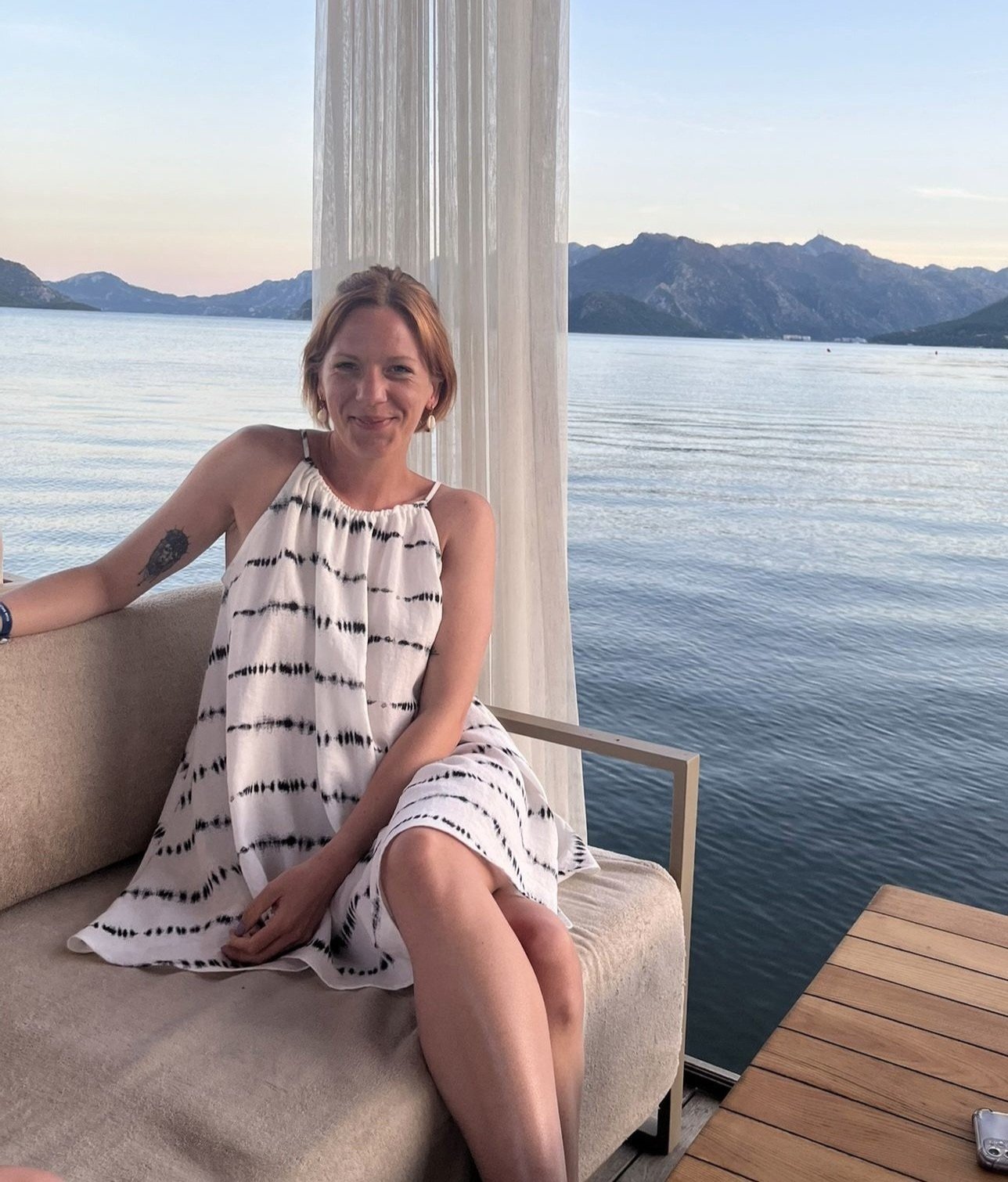
Written by Chelsea Branch
Chelsea, 34, is a writer exploring the psyche, relationships with others and ourselves and the messy, beautiful journey of being human. She is currently juggling her online marketing business, blogs, multiple Google Drive folders with book ideas, a TV script, and poetry - all the things writers will get around to doing. Through her relatable ramblings, she hopes to bring laughter, hope, and healing. Find her on Instagram @chelseabwrites.