Raving Isn't Just For The Youngsters: There’s No Shame in Being A Silver-Haired Regular on the Dancefloor
I always loved dancing. From a young age, I was exposed to the party scene courtesy of my grandparents, who would throw parties a few times a year. They were magical, multigenerational affairs made up of Windrush-era pioneers, aunts and uncles either just out of their teens, or – like my parents – in their thirties, and us young ones. With my uncle at the decks, the music satisfied everyone, and we children got a good grounding in reggae and calypso. By the time I was twelve years old, I had joined the grown-ups on the living room dance floor.
Fifteen was a coming of age, when I was considered old enough to rave sans parents, so to speak, and High Wycombe’s Multicultural Centre became home to regular events. It was the eighties, and second generation Caribbeans like me were burgeoning adults, forging their own way in the world. Musically it was an incredible time to be young: of course, we loved soul music from across the pond (we were the original ‘Candy’ children), but Brit Funk had taken hold, and the likes of Loose Ends, The Cool Notes and 52nd Street found an enthusiastic audience in the fourteen- to twenty-eight-year-olds in leafy Buckinghamshire.
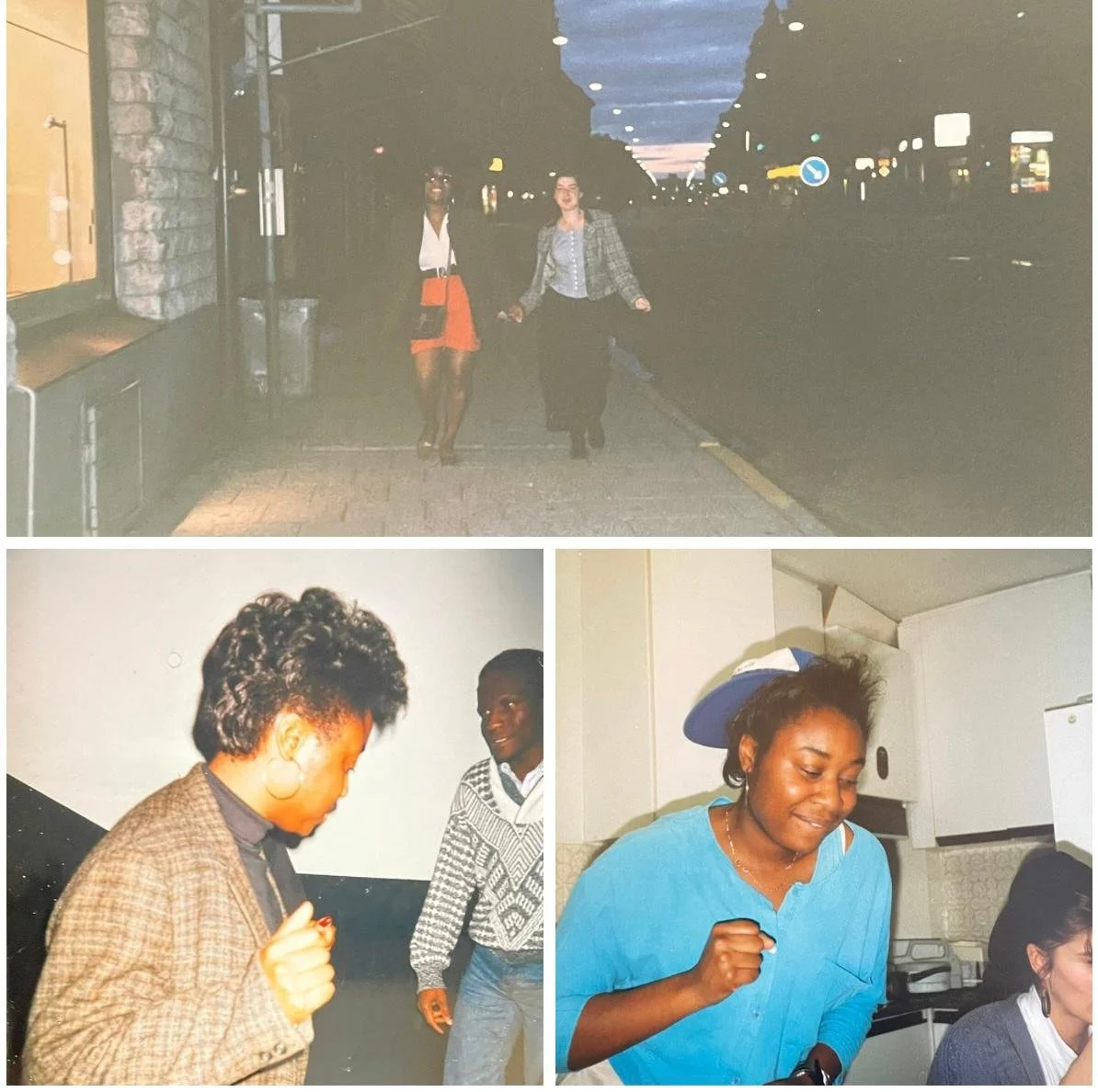
The vibe was incredible. Our cultural connections meant that we knew each other through our parents and gave us a strong sense of community. The DJs knew exactly what the crowd needed and took pleasure in teasing us. Those were the days of ‘haul and pull up’, where we’d go wild on hearing the intro to the song du jour, only for the DJ to lift the needle and leave us chomping at the bit. We’d look at each other, smiling and knowing that in a few seconds we’d be hit with the full force of a song like Twilight by Frankie Beverly’s Maze.
Speaking of DJs, High Wycombe had the honour of hosting the giant of the reggae/dance hall scene, David ‘Ram Jam’ Rodigan. The son of a military man, Rodigan was and still is revered the world over for his commitment to championing reggae music since the 1970s. Though a soul girl to the core, being treated to an afternoon of reggae with Rodigan at the Town Hall was a treat I shall always remember.
Other DJs who graced the shires with their presence include Trevor Nelson who remains an R ‘n B musical staple.
I continued raving with a new community at university who shared my love of dancing. Soul night in middle class Guildford became a thing, in an if you know you know kind of way.
When my circumstances – career, marriage, parenthood – changed, the raving stopped, which, according to a My London survey in 2019 made sense. Unpredictable weather, faffing around with babysitters and the cost of the taxi home were among the reasons for allowing the dancefloor ship to sail.
And there’s also the unspoken rule that there comes a point in one’s life when one must put away childish things like clubbing and take up pastimes like watercolour painting or stamp collecting. Everywhere you look, there are more festivals than you can shake a stick at and there is no shortage of teenagers in attendance, coming up for air after their GCSEs and A Levels, and sundry twenty-something wage slaves escaping the nine-to-five.
But do they really have the monopoly on kicking up their heels on a Saturday night, or is there more to this story?
At a corporate party recently, I asked four people, ranging from their twenty-six to fifty-eight if they believed raving was strictly for the young and the response was a resounding, ‘not at all!’ One woman said her parents were still raving and waved her hands in the air by way of illustration.
The more I looked into it, the more I learned about the reality of raving in middle age.
The Caister Soul Weekender was established in 1987 and grew out of a love of 80s soul music. Now in its fourth decade, this is a rave extravaganza for grown-ups. Not a one-night event, but the better part of seventy-two hours of as much R n B as you can handle. And the rave scene that came to prominence in the late eighties and nineties, thanks to the emergence of House music, and later Techno never really went away. The audience just grew up.
Beginning in the eighties, raves often held in abandoned warehouses, promoted principles of peace, diversity and connection, all ideals that impressionable teens coming of age in the eighties would have sought to espouse, especially when you consider they would have grown up in the Thatcher era of factory closures, unemployment and privatisation.
Raves were a refuge, so it makes perfect sense for this same generation to come together decades later, as the UK struggles with the social, political, technological and financial challenges that are part and parcel of life in the 21st century. Music and dance have always been about escape and everyone’s entitled to escape, irrespective of age.
And it’s important to consider that we are living in a time when we are taking our mental health more seriously. One friend, Jackie, who has raved ‘through pregnancies, bringing up children [and] going through trauma’, describes nights out as ‘losing touch with the stresses of life even just for a short time’. To rave then, is to heal.
What the rave in all its iterations – be it house or techno, Soul in the Algarve, or the Rewind Festival – provides is some much-needed respite from the stresses of life and a chance to connect in a way that’s real and joyful.
The added bonus that ties in beautifully with these reflections on the cut off point for ravers is the democratisation of the rave: techno events have become multigenerational affairs where dancers are united by their love of the genre. And don’t worry if you can’t find a babysitter for when you hightail it to the Rewind Festival: whether they’re your children or grandchildren, the organisers welcome babes in arms.
While there remain venues that are the destiny of choice for the under thirties exclusively, my exploration of the nightclub/rave scene has convinced me that the era of the over 40s raver is here to stay and there’s no shame in being a silver-haired regular on the dancefloor.
Look out for me in twenty years’ time. I’ll be the one grooving with my daughter, her friends and their children.
Written by Laurie O’Garro